
Flexible Floor Bunding for Drive-Over Spill Containment
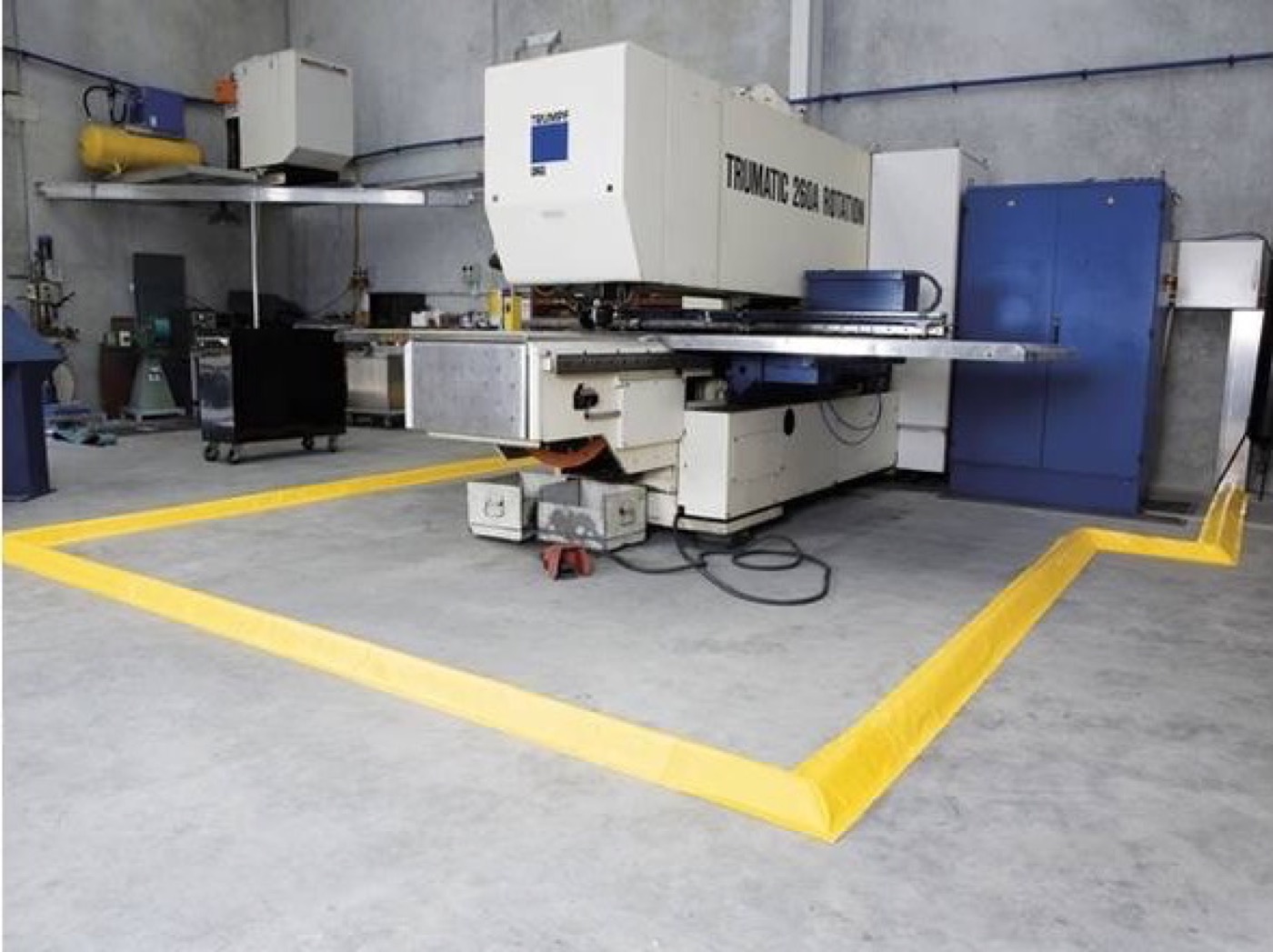
Flexible floor bunding creates a permanent containment boundary across doorways, thresholds, wash-bay entries and other controlled access points where forklifts, pallet jacks or vehicles need to cross the bund edge. The correct profile is selected from ground clearance, crossing frequency, surface, liquid and containment requirements.
50 mm low profile
For occasional, low-speed crossings.
75 mm triangular profile
The principal controlled drive-over option.
150 mm high profile
For containment-first areas where traffic is routed around the bund. Not intended for drive-over.
Typical 14-day lead time*
Around 14 days before despatch, subject to configuration and availability.
Configured for your site
Confirm the right profile before ordering
Send us your liquid or SDS, site dimensions, floor surface and vehicle details. We’ll confirm the suitable profile, lengths, corners and installation components.
Typical lead time: around 14 days before despatch.* Conditions apply; timing is confirmed with your quote and depends on configuration and current availability. Need it in a hurry? Call 0434 314 803.
Trusted by organisations across Australia






Flexible Floor Bunding Profile Selector
Use the profile comparison below as a starting point. Final selection must account for the liquid and SDS, required containment, floor surface, vehicle type, ground clearance, crossing speed and traffic frequency.
↕ 50 mm
▬
50 mm low profile
205 mm W × 50 mm H
Low-obstruction option for access-critical areas and occasional controlled crossings.
Occasional crossing
↕ 75 mm
▲
75 mm triangular profile
205 mm W × 75 mm H
Balanced containment and wheel transition for controlled, low-speed access points.
Principal drive-over
↕ 150 mm
▬
150 mm high profile
205 mm W × 150 mm H
Containment-first option for dedicated areas where traffic can be routed around the barrier.
Not drive-over
Indicative profile shapes use a consistent display height for easy comparison. The ↕ labels show each profile’s actual height; all profiles have a 205 mm base width.
| Profile | Standard lengths | Profile size | Best suited to | Traffic guidance |
|---|---|---|---|---|
| 50 mm low profile | 2 m | 205 mm W × 50 mm H | Door thresholds, walkways and access-critical areas with lower containment requirements | Occasional, controlled low-speed crossings where clearance allows |
| 75 mm triangular profile | 5 m, 10 m and 30 m | 205 mm W × 75 mm H | Operational bays, transfer points, maintenance zones and shared access areas | Principal option for controlled, low-speed forklift and pallet-jack crossings |
| 150 mm high profile | 2 m | 205 mm W × 150 mm H | Dedicated chemical storage, plant rooms and containment perimeters | Containment-first barrier; not intended for drive-over use |
Available System Components
| Component | Availability | Selection note |
|---|---|---|
| Straight bunding lengths | Profile-specific standard lengths | Quantity is calculated from the confirmed containment perimeter. |
| 90-degree corner joins | Matching corners available | Include every sharp turn in the marked-up layout or site photos. |
| Installation kits | Matched to the selected configuration | The bonding and fixing arrangement must suit the profile, substrate and traffic conditions. |
Other current configurations can be quoted where suitable. Trade Enviro confirms the profile, lengths, corners and installation components before supply.
Best Suited To
- Warehouses, operational bays and maintenance areas
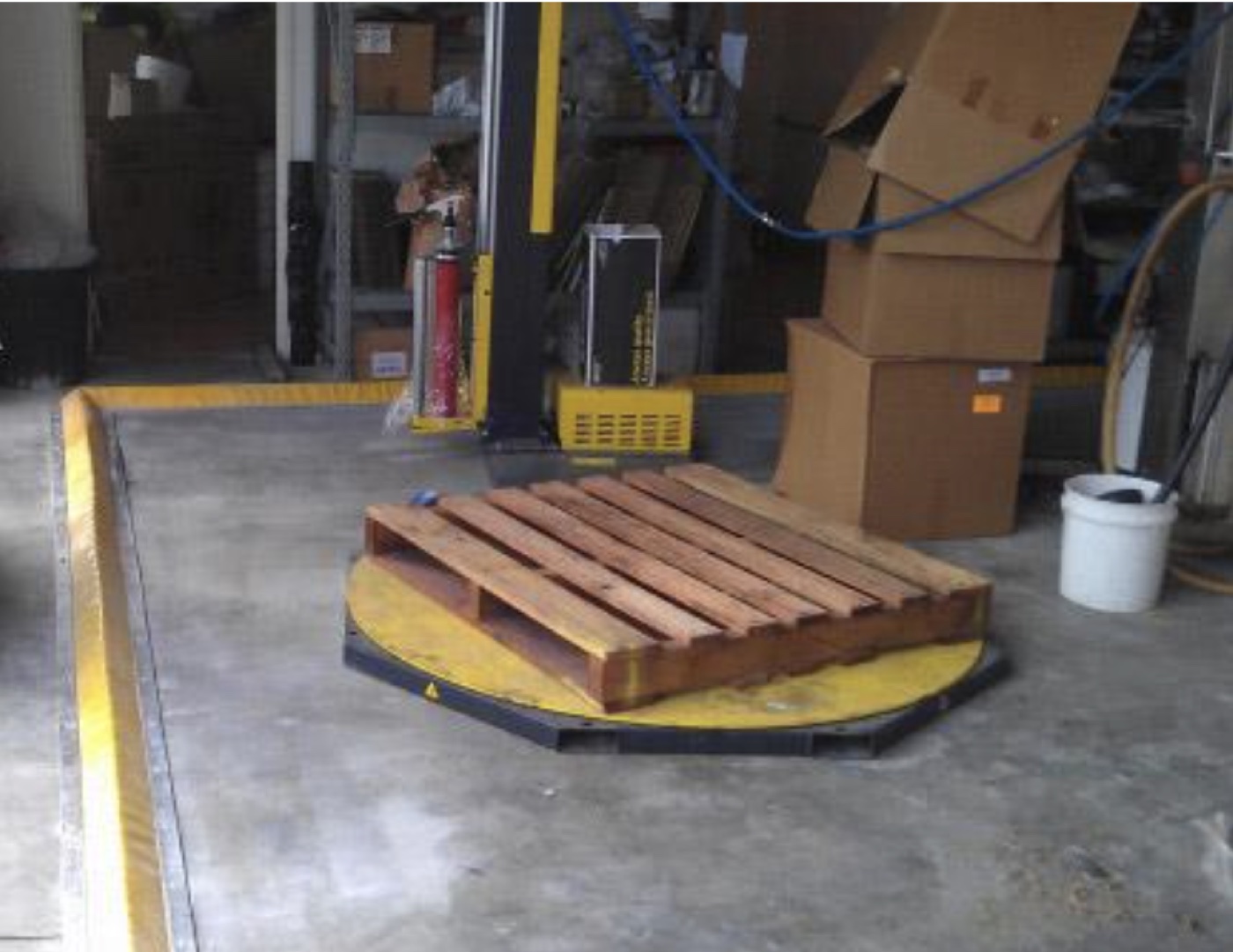
- Doorways, thresholds and controlled access points
- Wash-bay entry and exit points
- Transfer and decanting points
- Hazardous-liquid storage areas where material and layout are confirmed
Traffic and Access Limits
Flexible floor bunding suits controlled access points rather than high-speed or continuous heavy-traffic lanes. Vehicle type, wheel arrangement, ground clearance, crossing speed, turning and braking near the barrier must be considered before selection.
The 75 mm triangular profile is the principal option for controlled, low-speed forklift and pallet-jack crossings. The 50 mm profile prioritises access for occasional crossings. The 150 mm profile prioritises containment and is not a drive-over barrier.
How Flexible Drive-Over Bunding Works
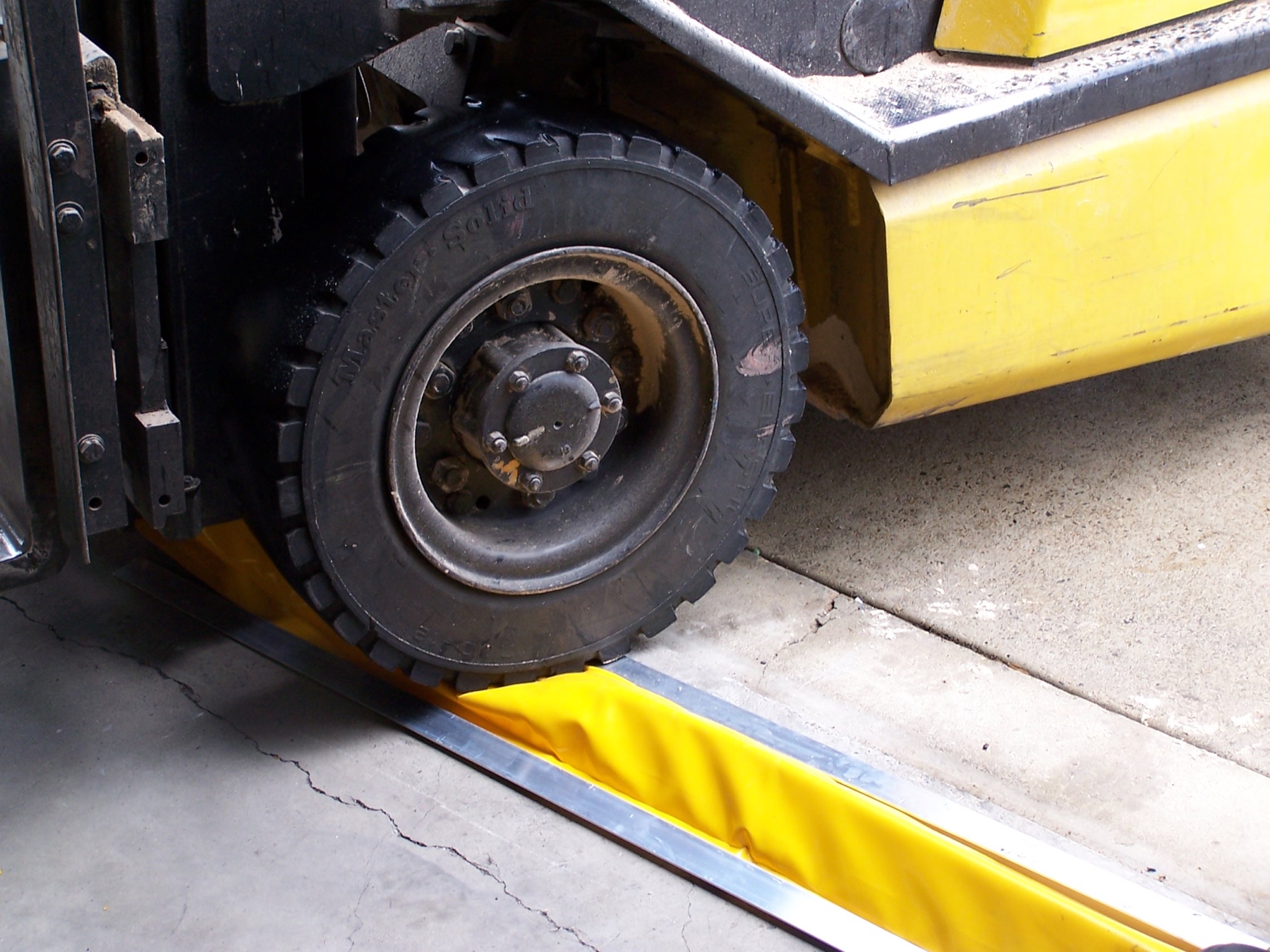
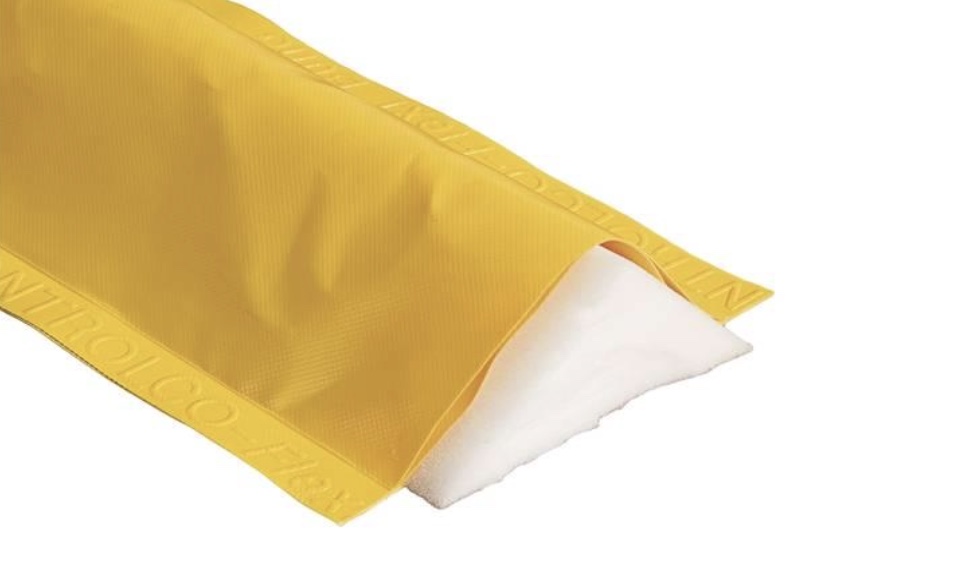
The flexible profiles use purpose-extruded foam encased in heavy-duty, high-visibility 900 gsm PVC. When an appropriate drive-over profile is correctly installed, it compresses during a controlled vehicle crossing and returns to shape afterwards.
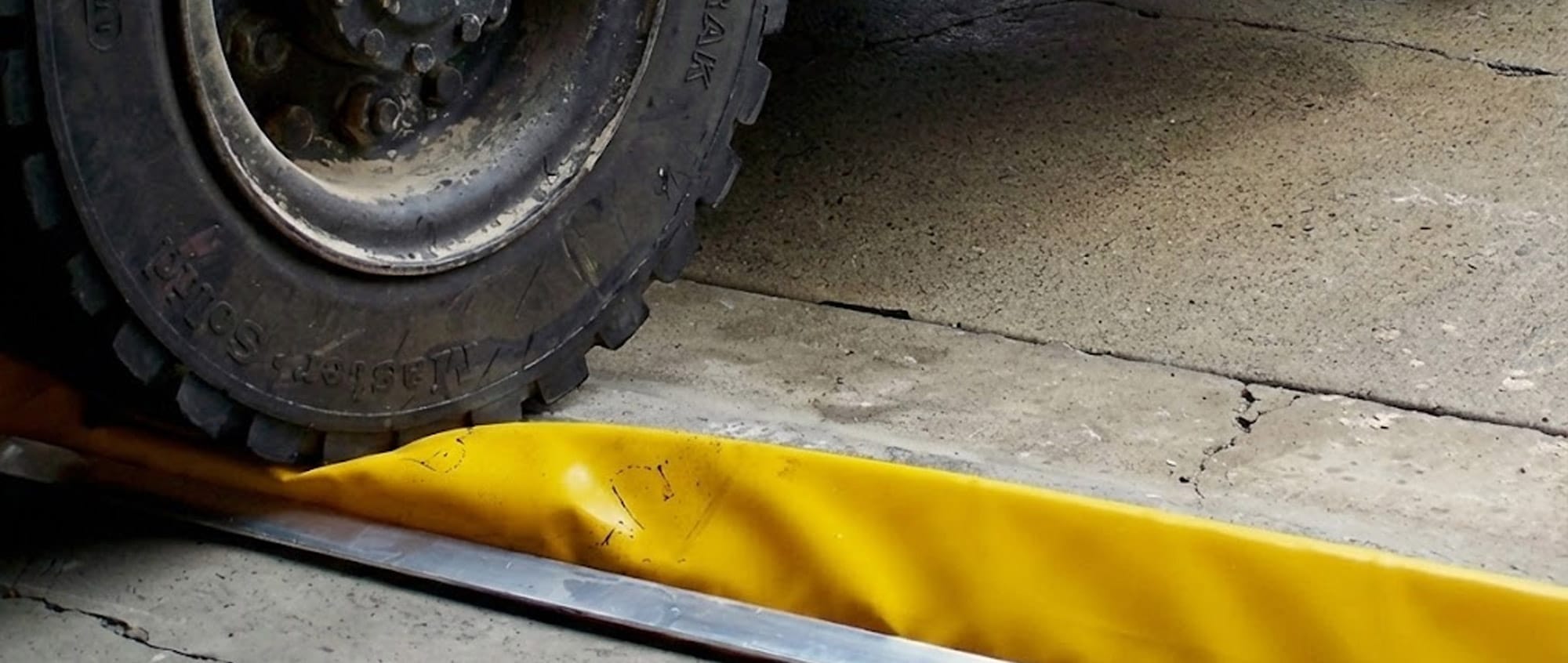
Drive-over access
Designed for controlled, low-speed crossings by suitable forklifts and pallet jacks. Ground clearance must be checked before purchase.
Liquid compatibility
Compatibility depends on the liquid, concentration, exposure and required service life. Supply the product name and SDS for checking.
Site-specific installation
Surface, profile, joins and fixings are selected together. Adhesive must cure before pedestrian or vehicle traffic crosses the bund.
Materials and Chemical Compatibility
The profile is manufactured from purpose-extruded foam encased in heavy-duty, high-visibility 900 gsm PVC. PVC is not suitable for every chemical or exposure condition. Compatibility depends on the exact liquid, concentration, contact time, temperature and required service life. An alternative fabric or containment system may be required where PVC is unsuitable.
For selection, provide the product name and current Safety Data Sheet. Trade Enviro can then assess the material alongside the containment objective and site conditions.
Installation and Site Preparation
Flexible floor bunding can be installed by a competent site team. If preferred, Trade Enviro can arrange installation as part of the quoted system. The exact adhesive, fixing method and cure time depend on the selected profile, substrate and supplied installation instructions.
- Before fixing, unroll the profile and allow any storage folds or indentations to relax in accordance with the supplied instructions.
- Degrease, wash and fully dry the installation surface. Remove dust, debris, oil and residue that could weaken the bond.
- Mark the containment perimeter, dry-lay the lengths and confirm all turns before cutting or applying adhesive.
- Clean and prepare the underside of the profile so the bonding system can adhere correctly.
- Apply the specified bonding agent and adhesive to the recommended channels, joins and corners to form a continuous watertight seal.
- Use only the mechanical fixings or reinforcement specified for the selected profile and substrate.
- Keep pedestrian and vehicle traffic clear until the adhesive has reached the cure time stated in the supplied instructions.
- Inspect traffic zones, joins, edge seals and the barrier profile routinely, repairing damage before containment or safe crossing is affected.
Areas exposed to frequent or heavy vehicle traffic may need protected crossing points, ramps or a different bunding construction. Send site photos, vehicle details, ground clearance, crossing frequency and surface information so the system and installation method can be checked before quoting.
Flexible Floor Bunding Compared with Other Options
Rubber floor bunding: our preferred solution for permanent, heavy-duty floor containment. Supplied in long continuous sections to reduce the number of joins across the bund. Suitable for forklift and vehicle access, with ramp options available where regular crossings are required.
Flexible floor bunding: a compressible drive-over profile suited to locations where forklifts or vehicles need to cross the containment boundary frequently without separate ramps. Suitability depends on profile height, ground clearance, traffic frequency and speed, surface and the liquid being contained.
Portable bunding: a relocatable option for temporary works, short-term projects or sites where the containment area must move.
Not sure which construction fits the site? Review the spill-containment bunding range or send the site details for a configured recommendation.
Request a Configured Floor-Bunding Quote
Tell us the liquid and SDS, containment objective, available dimensions, surface condition, vehicles or equipment, ground clearance, traffic frequency and site location. Photos and a simple marked-up layout help confirm the profile, lengths, corners and installation components.
Typical lead time: around 14 days before despatch.* Conditions apply; timing is confirmed with the quote and depends on the selected configuration and current availability. Need it in a hurry? Call 0434 314 803.
Warranty: 12 months against defects and workmanship, subject to the supplied warranty terms, correct product selection, installation and use.
Flexible Floor Bunding FAQs
How does flexible drive-over floor bunding work?
Purpose-extruded foam is encased in heavy-duty PVC to form a flexible barrier. An appropriate profile compresses during a controlled crossing and returns to shape afterwards. Correct installation and suitable ground clearance are essential.
Can forklifts and vehicles cross it?
The 75 mm triangular profile is the principal option for controlled, low-speed forklift and pallet-jack crossings. The 50 mm profile may suit occasional low-speed crossings where clearance allows. The 150 mm profile is not intended for drive-over use. Vehicle and traffic details must be checked before supply.
Is flexible floor bunding suitable for a high-traffic lane?
Not for high-speed or continuous heavy traffic. Those conditions require a different bunding construction or traffic arrangement. Trade Enviro can review the vehicles, crossing frequency and site layout before recommending a system.
What surface is required?
The substrate must be structurally suitable, clean and free from dust, debris, oil and grease. Poor or dusty surfaces may need to be sealed or otherwise prepared. Adhesive must cure before the barrier is put into service.
Is the PVC suitable for every chemical?
No. Compatibility depends on the liquid, concentration and exposure conditions. Provide the product name and SDS so the material can be checked. An alternative fabric or containment system may be required.
What information is needed for a quote?
Provide the liquid and SDS, required containment area, dimensions, surface, vehicles and ground clearance, traffic frequency, site location, photos and any installation requirements.
What warranty and lead time apply?
A 12-month warranty against defects and workmanship applies subject to the supplied warranty terms. Typical lead time is around 14 days before despatch, subject to configuration and current availability. Timing is confirmed with the quote; urgent requirements can be discussed on 0434 314 803.
Can flexible floor bunding be self-installed?
Yes. A competent site team can install many configurations when the supplied instructions and site safety requirements are followed. Trade Enviro can also arrange installation. Any site-specific preparation, equipment or specialist requirements are confirmed with the quote.
How long before people or vehicles can cross the bunding?
Do not permit pedestrian or vehicle traffic until the specified adhesive has reached its required cure. The exact time depends on the adhesive, weather, substrate and configuration and is confirmed in the supplied installation instructions.
Can flexible floor bunding be installed around corners?
Flexible profiles can accommodate turns in some configurations, but the corner method depends on the selected profile, radius and site geometry. Mark and dry-fit the full perimeter before cutting, and include sharp turns or corners in the quote request.