

Spills are unavoidable for the majority of industrial and commercial sites. Oils, fuels, coolants, solvents and other liquids are essential to daily operations, but when spilled, can quickly create safety hazards and compliance risks.
Fast, effective containment is critical, and that’s where floor sweep comes in. Floor sweep absorbents are one of the most practical tools for managing spills on hardstand areas, workshops, loading bays and other industrial surfaces.
In the following guide, we’re going to cover: when to use floor sweep, how it works, and how to apply it correctly.
Why Fast Spill Cleanup Matters
Uncontrolled spills can:
- Create slip hazards (for staff and site visitors)
- Enter stormwater drains and trigger environmental compliance breaches
- Contaminate soil or groundwater
- Result in clean-up costs, fines, or additional regulatory scrutiny
Even small leaks from vehicles or machinery can accumulate over time. For most sites, preventing contaminants from reaching drains or leaving the premises is also a legal obligation, not just best practice.
Unsure about your reporting obligations? see our guide to environmental spill reporting.
What Is Floor Sweep?
In simple terms, floor sweep is a granular or powdered absorbent material designed to soak up liquid spills on solid surfaces.
Unlike absorbent pads or booms, floor sweep can be spread across wide areas and even worked into uneven surfaces, making it particularly useful for:
- Workshops
- Warehouses
- Hardstand areas
- Maintenance zones
- Fuel storage areas
- Car parks and loading bays
Most floor sweeps are designed to absorb hydrocarbons and general liquid spills quickly, reducing spread and simplifying clean-up.
When to Use Floor Sweep
Floor sweep is best suited to:
- Oil and fuel spills on concrete or asphalt
- Coolant or hydraulic fluid leaks
- Broader surface spills that need rapid coverage
- Uneven ground where pads may not sit flat
- Initial containment before final cleaning
For drain protection or large flowing spills, floor sweep may be used alongside spill kits, drain covers or absorbent booms.
If you’re unsure which absorbent is appropriate, see our Complete Spill Kit Guide.
How Floor Sweep Works
Floor sweep absorbents work by encapsulating liquids within their granular structure. When properly applied and mixed, the absorbent binds with the liquid until the surface appears dry.
Because the material is granular, it can:
- Spread easily over wide areas
- Be worked into cracks or textured surfaces
- Create less waste than large volumes of pads for certain spill types
Some products are purely absorbent. Others, such as biologically active floor sweeps, also assist in breaking down hydrocarbons over time.
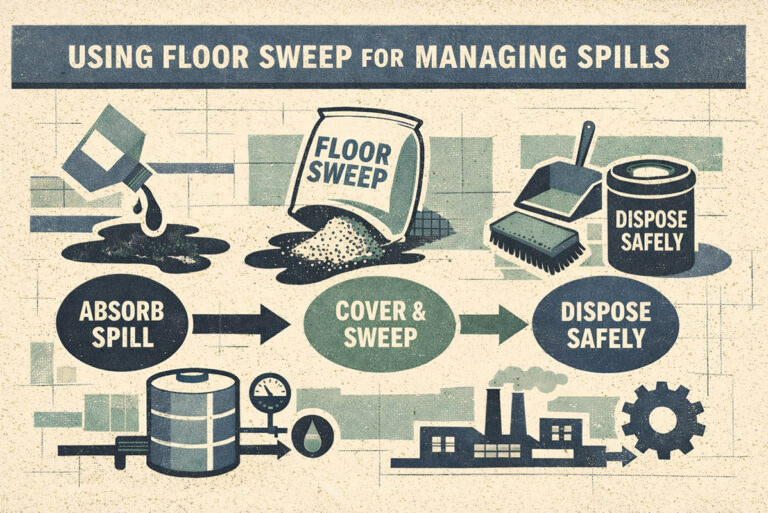
Step-by-Step: How to Use Floor Sweep
For spills on hard surfaces, follow these basic steps:
- Respond Quickly
Ensure spill kits and absorbents are stored in accessible locations so staff can respond immediately. (Ensure staff are well trained) - Apply Generously
Pour or dust the floor sweep evenly across the entire spill area. Cover slightly beyond the visible edge to prevent spread. - Work the Material In
Using a broom or rake, mix the absorbent into the liquid. This increases contact and improves absorption efficiency. - Check for Dryness
Continue mixing until the material appears dry and free-flowing. If wet patches remain, add more absorbent material. - Sweep and Collect
Once fully absorbed, sweep up the material and place it in a suitable disposal container. - Dispose
Disposal requirements depend on the liquid absorbed and local regulations. Contaminated absorbents may require controlled waste disposal.
Always follow site procedures and relevant environmental guidelines.
Specialised Option: Biologically Active Floor Sweep
Some floor sweep products contain hydrocarbon-degrading microorganisms.
For example, biologically active cellulose-based sweeps can:
- Absorb oils and fuels
- Assist in breaking down hydrocarbons over time
- Reduce long-term contamination risk on soil surfaces
These products can be particularly useful in environmentally sensitive areas or where small ground spills occur.
They are not suitable for strong acids or highly alkaline solutions, so always confirm compatibility before use.
Common Liquids Floor Sweep Can Absorb
Depending on the product type, floor sweep absorbents may be suitable for:
- Oils and lubricants
- Diesel and petrol
- Hydraulic fluids
- Coolants
- Solvents
- Cooking oils
- Certain biological fluids
Always review product specifications to confirm suitability.
Storing Floor Sweep on Site
To ensure an effective response:
- Store bags in visible, clearly marked spill response areas
- Keep near high-risk zones (workshops, fuel storage, wash bays)
- Train staff in the correct application
- Inspect stock regularly
A lack of awareness or training when dealing with spills increases both clean-up costs and compliance risk.
Choosing the Right Floor Sweep
Not all floor sweeps are identical. Differences may include:
- Absorption rate
- Material composition
- Environmental performance
- Waste volume
- Biodegradation capability
Trade Enviro supplies a range of floor sweep absorbents suited to different industrial applications, available in 5kg and 10kg bags or pallet quantities.
If you’re unsure which option suits your site, speak with our team for practical, compliance-focused advice.
Final Thoughts
Floor sweep is a simple but highly effective tool for managing industrial spills. When stored correctly and applied quickly, it reduces spread, simplifies clean-up and helps protect both your site and the surrounding environment.
For larger spill risks or higher-hazard liquids, floor sweep should form part of a broader spill management plan including spill kits, drain protection and staff training.
Explore our full range of spill absorbent products or contact our team for guidance.