Guides

Practical environmental compliance guides covering spill kits, wash bays, bunding, stormwater management and marine containment. Designed for industrial and civil operators managing real site risks.

Visible Compliance: What a Regulator Really Sees First

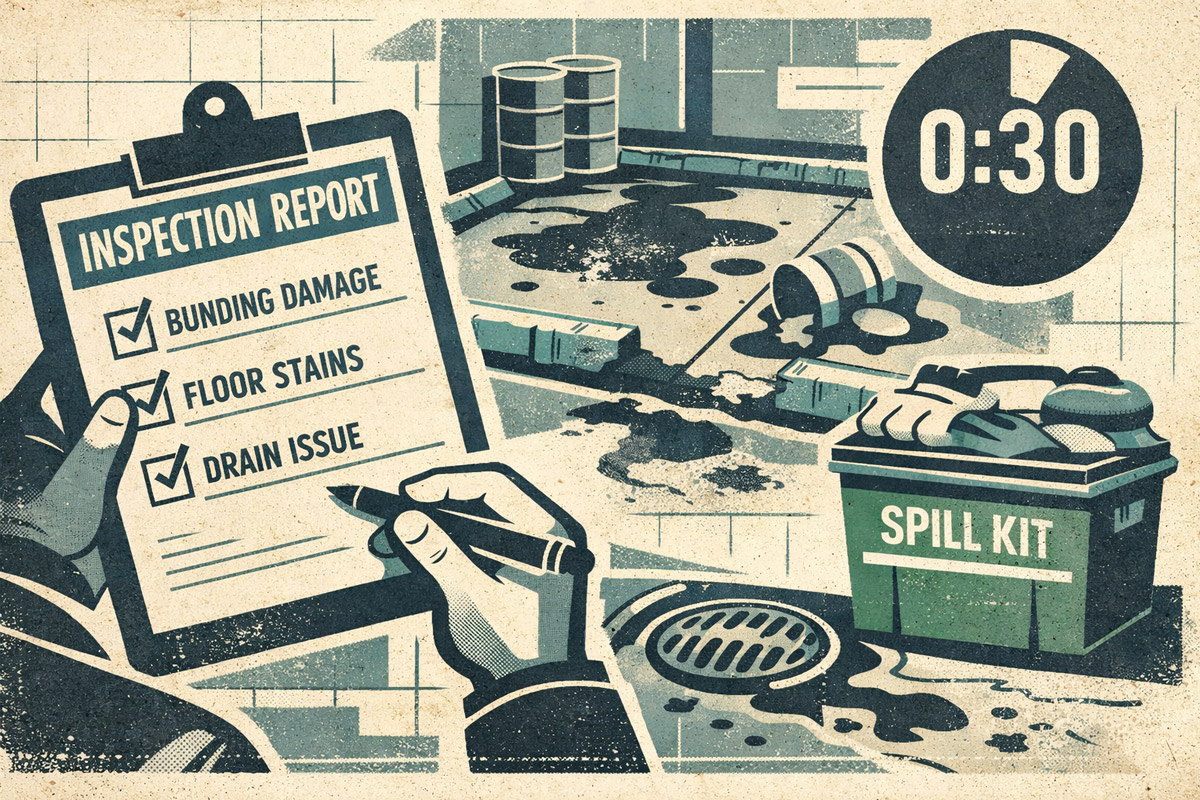
Inspector reviewing bunding area with damaged containment edge, spill staining, and nearby drain in warehouse

An inspector walks into your warehouse. Before they read a procedure…Before they check capacity calculations…Before they ask for documentation… They look at the floor. They look at the bund line.They look at the storage area.They look at the drain nearby. What they see in the first 30 seconds tells them whether containment is being managed …

Read more

Prevent Forklift Damage to Floor Bunding (Before It Fails)

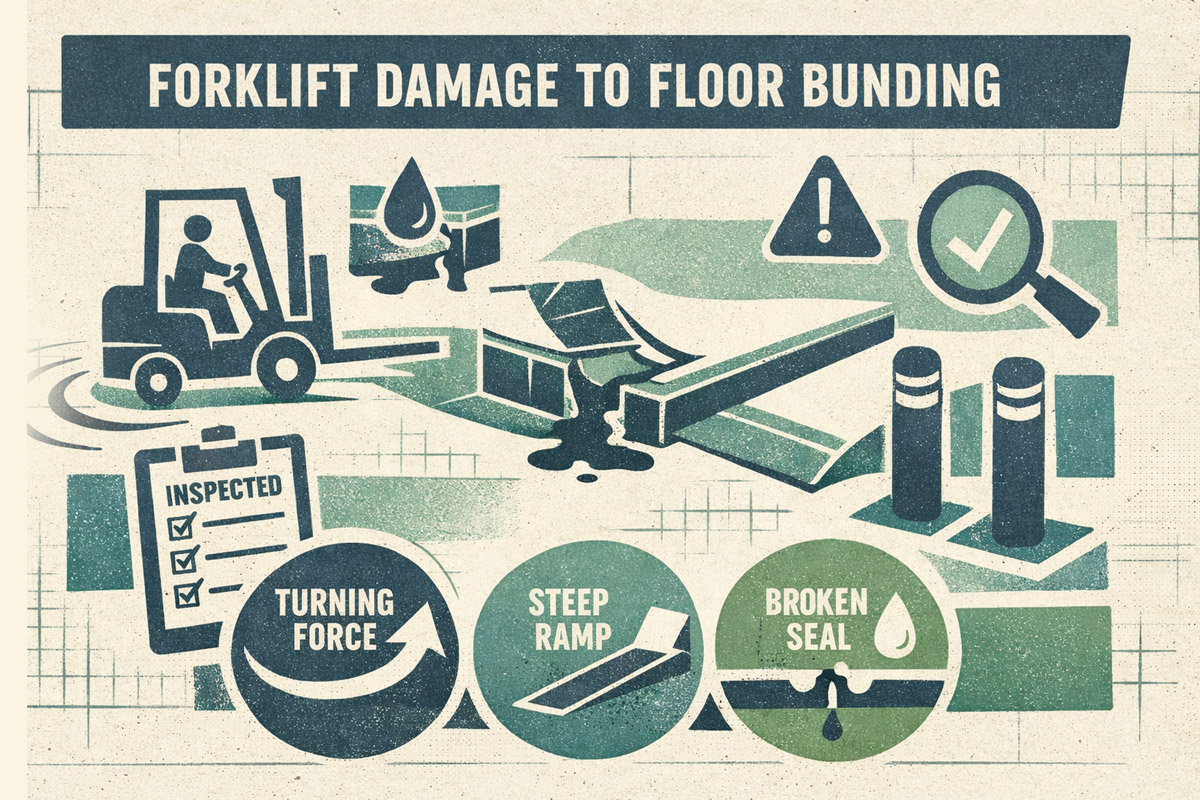
Forklift turning across floor bunding causing edge lifting and seal failure in a warehouse traffic area

You installed floor bunding last quarter. It looked compliant.It looked sealed.Job done. Then a loaded forklift turns too tightly at the bund edge. The edge lifts.The adhesive tears.The seal opens up. Your containment perimeter now has a gap. What looked like a finished installation is now a containment risk. Under the WHS Regulation 2011 (Qld), …

Read more

Portable Bunding for Civil & Temporary Sites

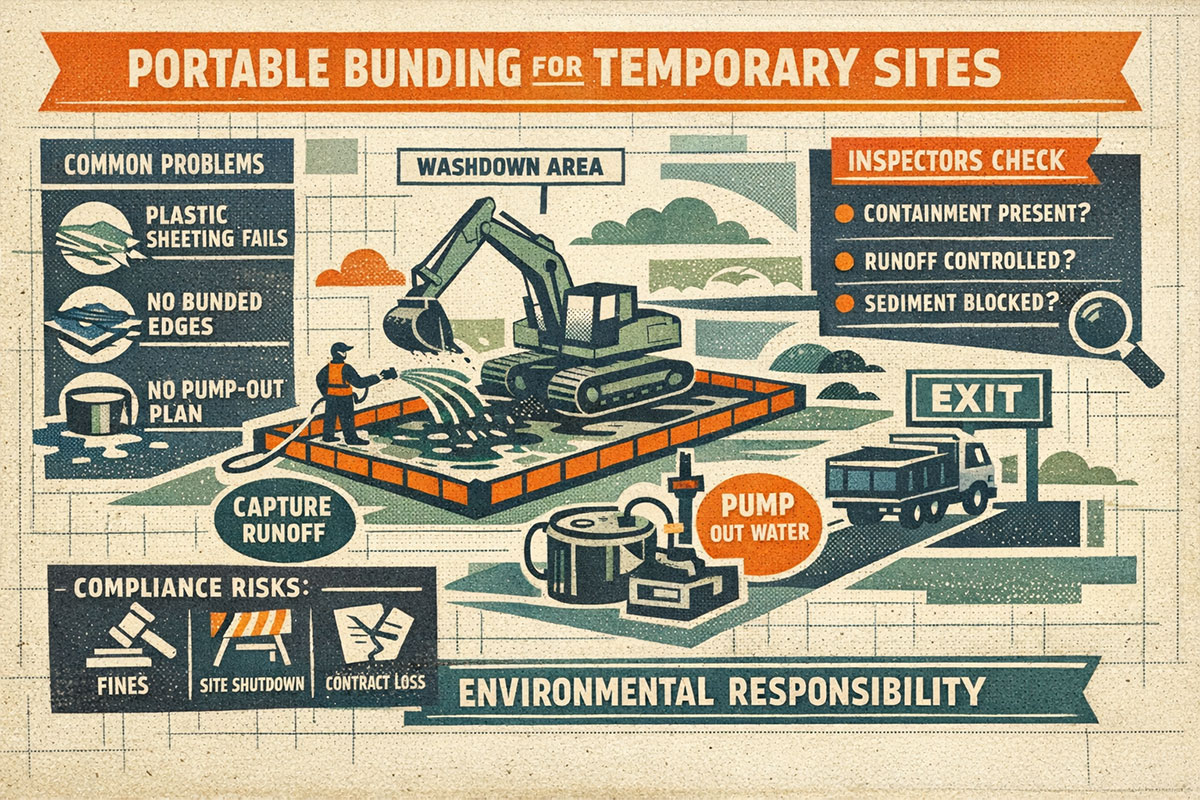
Temporary Site Bunding Solutions

Here’s the thing. You’re managing a temporary earthworks site. Heavy machinery exits the site daily, meaning mud, hydrocarbons and sediment track toward public roads. Under Queensland environmental and biosecurity requirements, vehicle washdown is mandatory before leaving certain sites. Failure to comply with these requirements can result in: You need washdown containment, but it needs to …

Read more

Segregating Dangerous Goods in Bunded Areas

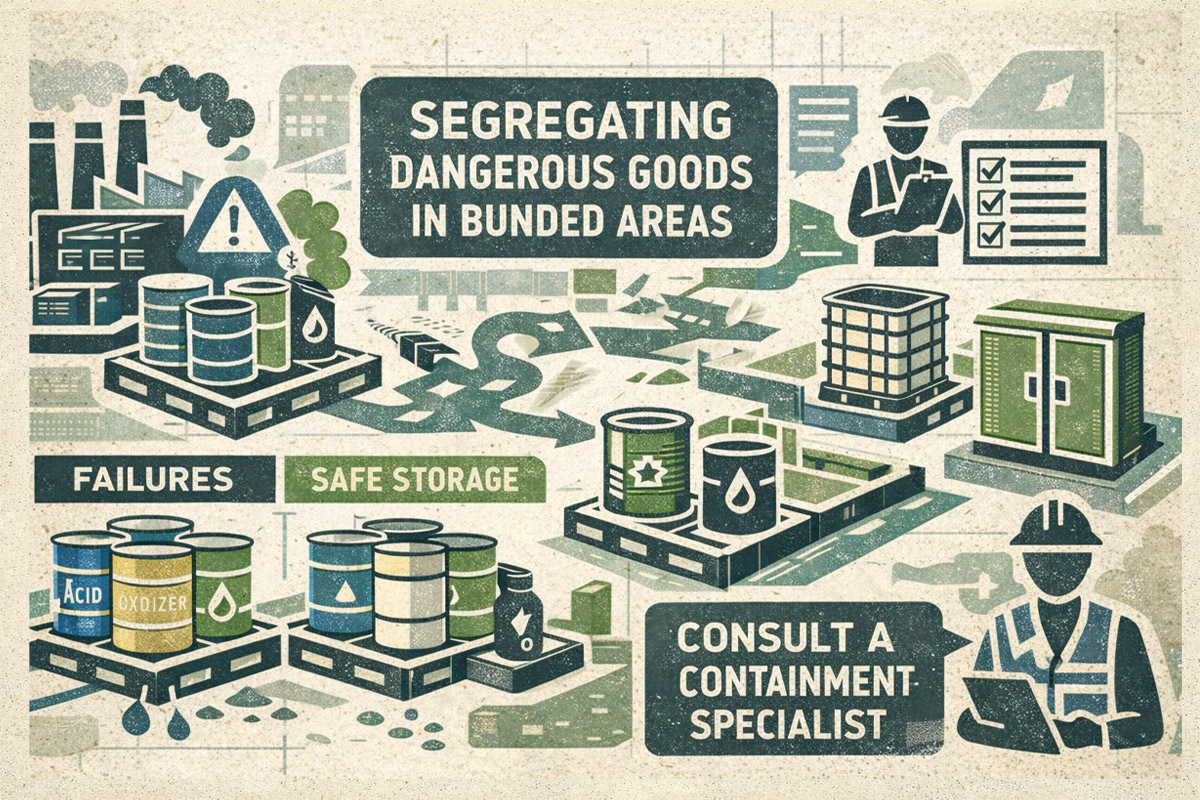
Segregating Dangerous Goods In Bunded Areas

What Gets Sites in Trouble Key Point: If incompatible liquids leak into the same sump, the bund may have contained the spill, but it will have failed to control the consequences. You walk past your chemical storage area. On one bunded pallet you have: They’ve been sitting there for months. Nothing has leaked. It looks …

Read more

Rainwater & Bund Capacity: The Hidden Compliance Failure

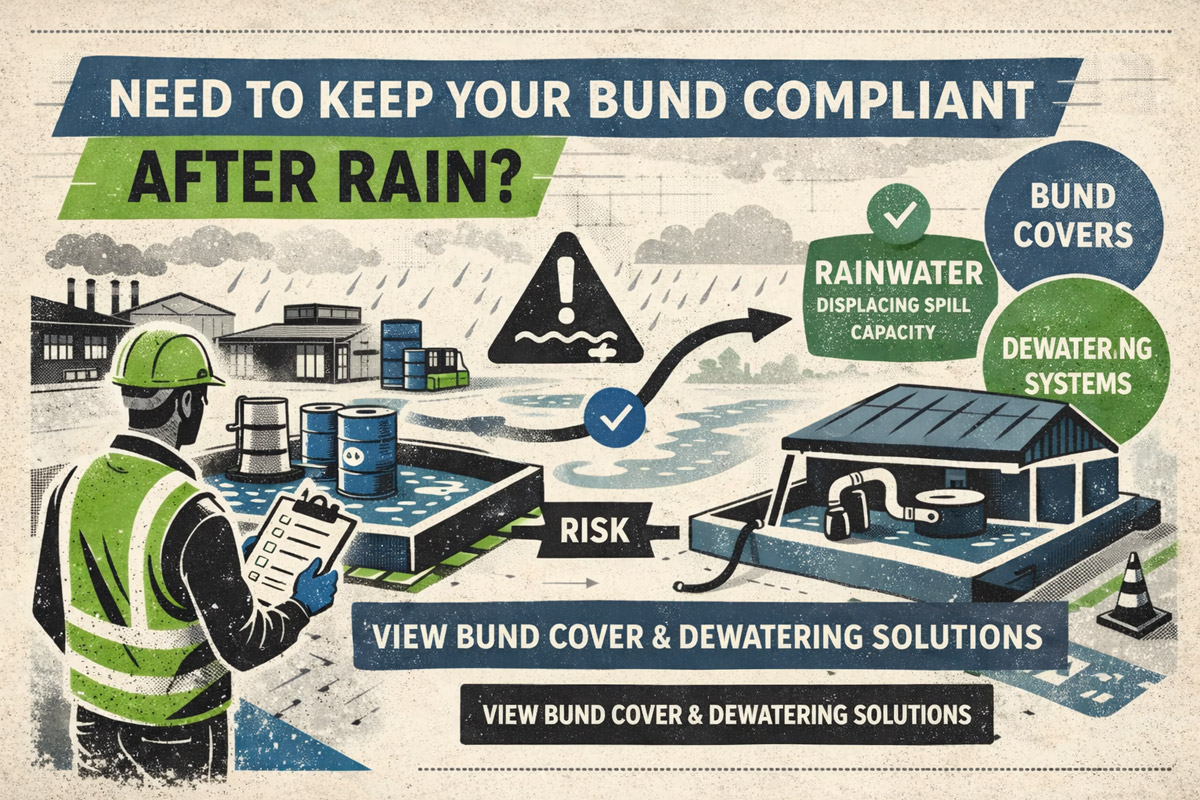
Rainwater filling an outdoor spill containment bund showing reduced containment capacity and solutions like bund covers and dewatering systems

A Storm Passes Through. Your Bund Is Full. You inspect your outdoor bund after heavy rain. It’s full of water. If a container ruptured right now, there would be no capacity left to contain the spill. Under AS 1940:2017, the required bund capacity must be available at all times. Why Rainwater Creates a Compliance Risk …

Read more

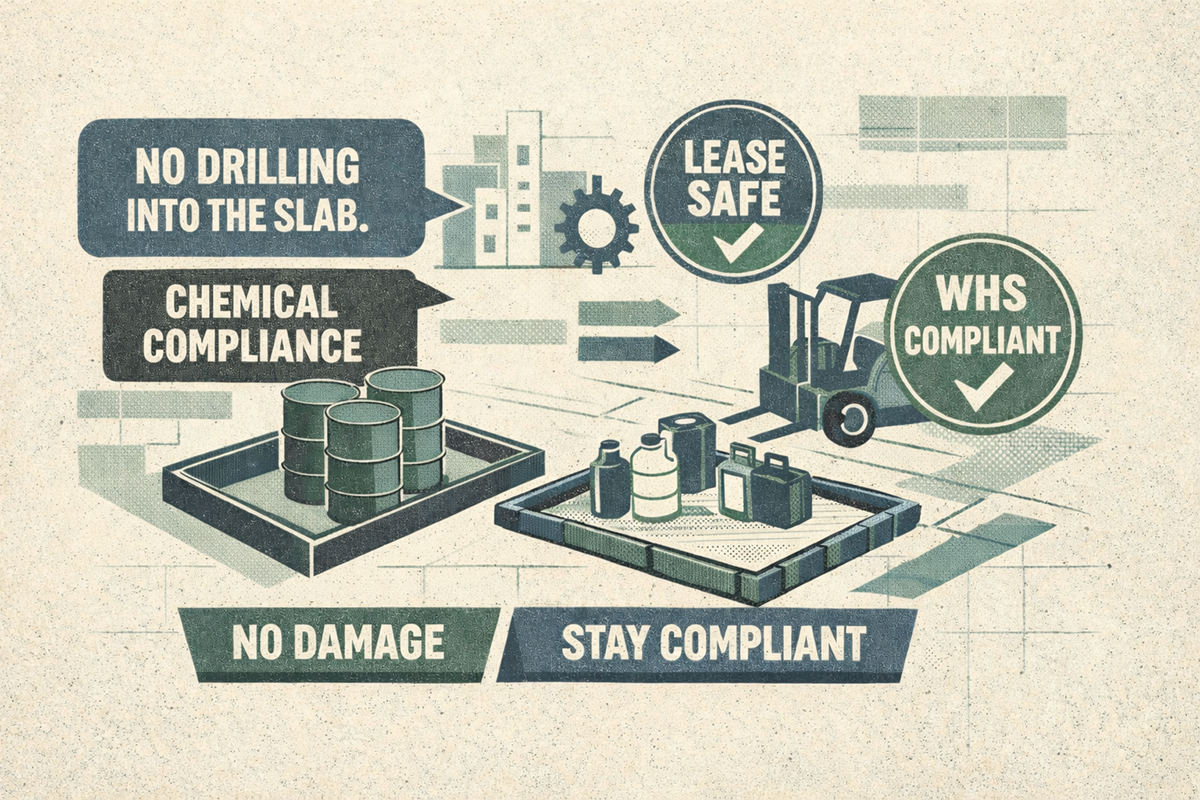
Bunding Without Drilling: How to Stay Compliant Without Touching the Slab

Bunding without Drilling - Featured mage

No Drilling Into the Slab You email the property manager: “We need to install floor bunding for chemical compliance.” The reply comes back quickly: “No drilling into the slab. No exceptions.” Now, what? Under WHS Regulation 2011 (Qld) s357, hazardous chemicals must be provided with secondary containment. But your lease prohibits drilling into the concrete. …

Read more

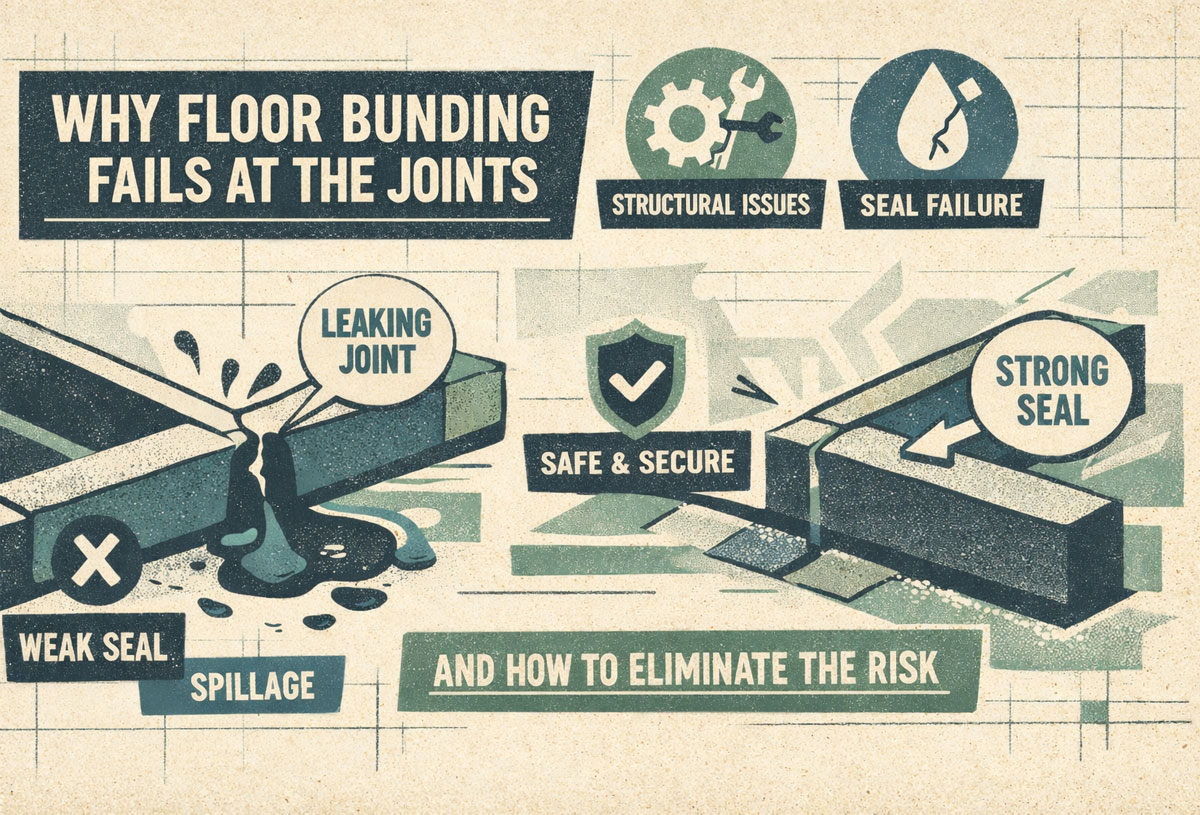
Why Floor Bunding Fails at the Joints – And How to Eliminate the Risk 

Why Floor Bunding Fails at the Joints - and how to Eliminate the Risk

When floor bunding systems experience performance issues, it is most commonly at the joints. Whether installed in workshops, wash bays, warehouses, fuel storage areas, or industrial facilities, in sectional bunding systems, the joint is typically the most mechanically sensitive point. And the number of joints in your installation directly affects your long-term risk.  The Hidden …

Read more

Stormwater Management for Industrial Sites (Australia)

Stormwater management in industrial settings

Stormwater management, in an industrial setting, means ensuring that rainwater leaving your site is not contaminated by site activities. Any water that has come into contact with oils, chemicals, sediment, washdown residues, or process waste must be contained, treated, or diverted to a lawful discharge pathway. Key Takeaways Stormwater management is a practical compliance issue …

Read more

Permanent vs Portable Wash Bays: How to Choose

Permanent V Portable Wash Bays

How to decide what’s right for your site If you’re planning a wash bay, the most important decision isn’t size, treatment type, or equipment – it’s whether the system should be permanent or portable. Get this decision wrong, and you may lock yourself into: This guide is written for site owners, facility managers, or anyone …

Read more

Bunding for Spill Containment in Australia

Bunding for Spill Containment

What is bunding? Bunding is a form of secondary containment, an impervious physical barrier designed to prevent liquids, such as oil, fuel, and chemicals, from escaping into the surrounding environment in the event of a spill or leak. Its purpose is to stop spilled liquids from reaching stormwater drains, soil, groundwater, or waterways. When an …

Read more

What Our Clients Say

“We are very happy with the service and product provided. Delivery was on time and the backup service couldn’t be faulted. I would most certainly use Trade Enviro again.”

Luke Hillery
Hillery Group

“Fantastic service and very quick turnaround. This is the second lot of bunds we’ve purchased and we cannot fault the service or product.”

Ben English
Atlas CEA

“A pleasure to deal with from quote stage right through to delivery. You’re fully informed throughout the process.”

Garry Solly
McMahon Services

Recent feedback from projects involving wash bays, bunding, spill response and marine containment.