

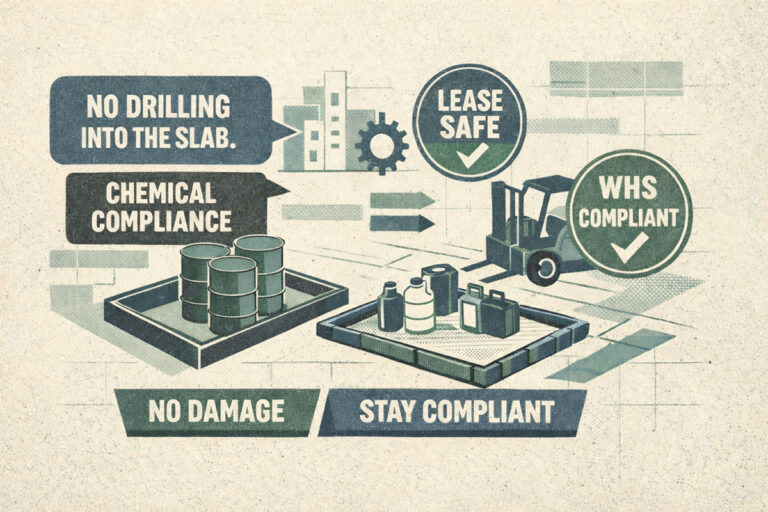
No Drilling Into the Slab
You email the property manager:
“We need to install floor bunding for chemical compliance.”
The reply comes back quickly:
“No drilling into the slab. No exceptions.”
Now, what?
Under WHS Regulation 2011 (Qld) s357, hazardous chemicals must be provided with secondary containment.
But your lease prohibits drilling into the concrete.
You can’t ignore compliance.
You can’t damage the building.
So what options do you have?
The Obligation Doesn’t Disappear Because You’re Leasing
Inspectors don’t care about your lease terms, and they won’t accept:
- “We’re only tenants.”
- “The landlord wouldn’t let us drill.”
- “It’s temporary.”
They check:
- Is secondary containment present?
- Is it continuous and liquid-tight?
- Is it securely fixed to the floor?
- Does it meet the required volumetric capacity?
In short. Containment must work, regardless of your circumstances.
The Key Variable: Traffic Load
Before choosing a system, one factor changes everything:
Will the area be driven over regularly?
If forklifts or machinery are crossing the bund line daily, the system must tolerate dynamic load and vibration.
If the area is static – such as drum storage or short-term storage, the structural demands are different.
That distinction determines how you should proceed.
Option 1: Non-Trafficable Areas
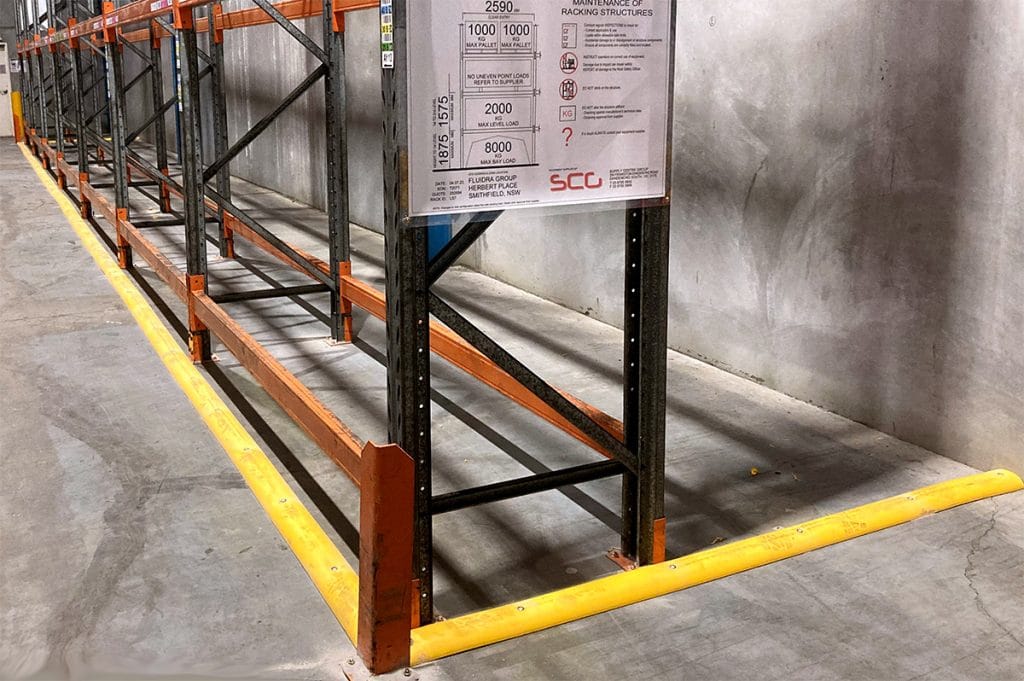
If the bunded zone is not regularly driven over, adhesive-installed rubber floor bunding can be suitable.
Rubber or PVC perimeter bunding bonded continuously to the slab can provide compliant secondary containment without mechanical anchors.
However, performance depends heavily on surface preparation.
Contaminated concrete, residual oil, dust or moisture will compromise bond strength. When adhesive installations fail, it’s usually preparation, not the material, that’s at fault.
When correctly installed on a clean, dry, prepared slab, bonded bunding can deliver continuous containment without penetrating the floor, provided you don’t plan to make it a heavily trafficked area.
This approach is typically suited to:
- Static drum storage
- Chemical staging areas
- Maintenance zones
- Low-traffic operational spaces
Option 2: Areas With Regular Traffic
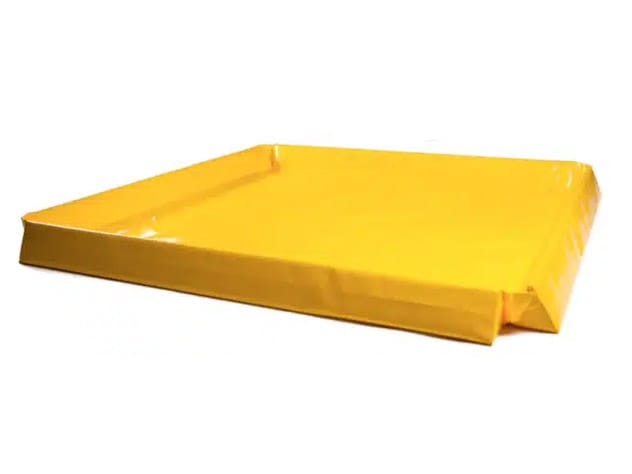
Where vehicles cross the containment boundary daily, adhesive-only perimeter bunding becomes harder to rely on long-term.
Repeated compression and vibration will stress bund systems over time.
In these environments, temporary bunding provides a more controlled compliance pathway.
These bunding systems:
- Sit directly on the slab
- Require no drilling
- Create defined containment zones
- Can be repositioned as operations change
They are particularly effective in:
- Short-term storage setups
- Facilities where layout changes regularly
- Hire sites
- Maintenance and shutdown works
- Leased sites where structural modification is prohibited
Temporary bunding manages the risk within the operational footprint.
Unsure What Your Site Requires?
Speak with our team before committing to equipment or installation. We’ll help confirm the right containment, washdown, or stormwater solution for your site.
- Leased, temporary or fixed site conditions
- Trade waste or EPA compliance questions
- Need confirmation before purchasing or installing
No obligation • Compliance-focused advice tailored to your site
The Practical Decision
If drilling is prohibited, the decision isn’t:
“How do we get around the lease?”
It’s:
“What system contains risk without altering the slab?”
In static areas, bonded bunding may be appropriate.
In trafficable areas, temporary bunding systems are often the safer compliance choice.
The correct solution depends on operational reality.
If the containment system reflects how the site actually functions, compliance becomes straightforward.
If it doesn’t, you end up fixing it after inspection.
Need Help?
In leased facilities, compliance doesn’t pause just because drilling isn’t allowed. The key is selecting a containment system that reflects how the space is actually used – whether that’s bonded perimeter bunding in static areas or temporary bunding systems in trafficable zones. If you’re unsure which approach fits your site conditions, we can help assess the operational risk and recommend a compliant solution that protects both your lease and your legal obligations.