
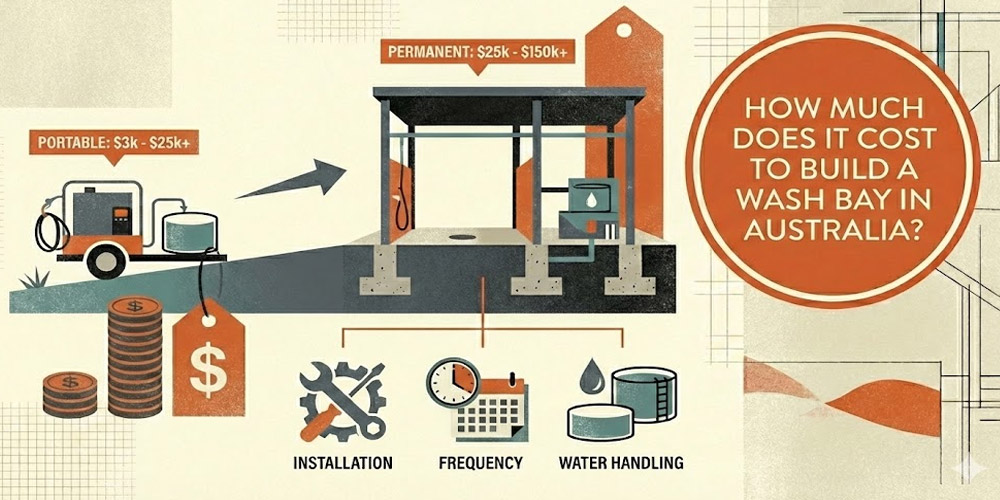
Wash bay system costs in Australia typically range from $3,000 to $25,000+; however, this is largely dependent on system configuration, size requirements, and how wash water is captured, stored, or treated.
It’s important to note. These figures relate to the wash bay system and wash water management components only. Where projects involve engineering, planning approvals, or extensive civil works, total project costs can increase significantly and, in some cases, exceed these figures many times over.
Understanding the application and compliance pathway early is crucial to avoiding overspending or underdesigning a wash bay solution.
| Wash bay type | Typical cost range | Notes |
|---|---|---|
| Portable wash bay (basic containment) | $3,000 – $6,000 | Light vehicles, low wash frequency, wastewater removed off-site |
| Portable wash bay with holding tank | $6,000 – $12,000 | Common on construction sites, depots, and fleet yards |
| Portable wash bay with holding tank + treatment | $12,000 – $25,000+ | Reduced pump-out frequency; sewer discharge subject to approval |
| Permanent wash bay (civil works) | $25,000 – $60,000+ | Concrete works, drainage, plumbing, approvals, and treatment systems |
| Large-scale Industrial Facility | $60,000 – $150,000+ | Multi-bay, heavy-duty concrete, roofing, and high-volume water recycling. |
Cost ranges shown above relate to wash bay systems and water management infrastructure. Civil works such as slabs, roofing, buildings, gantries, engineering design, and broader site development sit outside these ranges and can materially increase total project cost.
Wash bay system cost vs total project cost
A wash bay system is only one component of a complete wash down solution.
Permanent or large-scale wash facilities may also require concrete slabs, drainage works, structural roofing, engineering design, planning approvals, and integration into broader site developments.
These elements are highly site-specific and can exceed the cost of the wash bay system itself. This is why understanding the intended use and discharge method upfront is critical.
What determines wash bay cost?
Pricing varies based on site conditions and compliance requirements.
The main cost drivers are outlined below.
1. Portable vs permanent installation
Portable wash bays are designed to be relocated or reused. They typically involve lower upfront cost and minimal site preparation.
Permanent wash bays are fixed installations that usually involve concrete works, drainage infrastructure, and permanent plumbing connections.
Both system types can incorporate holding tanks, and wastewater treatment where required.
2. Wash bay size and footprint
Wash bay cost increases primarily with system size.
Larger wash bays require more mat area and bunded containment, and typically involve greater wash water capture and handling capacity.
3. Frequency of washdown
- Occasional washdown can often rely on basic containment with off-site wastewater removal.
- Regular or daily washdown typically requires holding capacity or treatment to manage operating costs and compliance risk.
Higher frequency generally increases upfront cost but can reduce long-term operating expense.
4. Wash water handling
This is often the largest cost variable.
Common approaches include:
- Capture and off-site removal via truck
- On-site storage using holding tanks sized for multiple washes
- Treatment prior to discharge (oil–water separation)
Where sewer discharge is proposed, trade waste approval and treatment components are required.
Ongoing costs to factor in
Beyond upfront supply costs, consider:
- Pump-out frequency and contractor fees
- Maintenance of pumps, tanks, and treatment components
- Trade waste sampling and checks (where applicable)
- Water usage and potential recycling options
In many cases, adding storage or treatment upfront reduces long-term operating costs.
Do wash bays require council or trade waste approval?
Approval requirements matter because they can significantly affect both total project cost and system scope.
Trade waste approval is driven by how wash water is captured, treated, and discharged – not by whether a wash bay is portable or permanent.
In some situations, separate approvals may also apply to the physical works themselves, such as building or planning approvals. These requirements sit outside trade waste and vary by site, council, and project scope.
- No sewer discharge:
Systems capturing wash water for off-site removal typically avoid trade waste approval and associated infrastructure costs. - Sewer discharge proposed:
Treatment components and trade waste approval from the local water authority are usually required, increasing both upfront and ongoing costs. - Permanent wash bays connected to sewer:
In many Australian jurisdictions, councils require roofing over permanent wash bays connected to sewer to prevent clean stormwater entering the trade waste system. This can materially increase cost due to structural works, roofing, and approvals.
Trade Enviro supplies wash bay systems with supporting documentation to assist with approval processes where required.
How to choose the right wash bay
The most common cost mistakes occur when site requirements are not properly understood.
For example, a high-capacity recycle system may be unnecessary if washdown is infrequent. Sites washing one or two vehicles per week often achieve compliance more cost-effectively using simple containment with pump-out, rather than complex treatment infrastructure.
Matching the system to wash frequency, discharge method, and site risk is one of the most effective ways to control total cost.
Before selecting a system, clarify:
- How often washdown will occur
- What vehicles or equipment are being washed
- Whether sewer discharge is required or water can be removed off-site
- Whether the site is temporary or permanent
The right wash bay solution balances regulatory compliance, site constraints, operational needs, and long-term practicality, not just upfront price.
How we can help
Trade Enviro supplies portable and permanent wash bay systems configured for Australian industrial, construction, and fleet environments across Australia.
Our focus is on:
- Practical, site-appropriate system configuration
- Providing expert, practical advice on wastewater management
- Avoiding unnecessary civil works
- Supporting compliance without increasing project costs
Related products and guides
- Portable wash bays for vehicles and equipment
- Permanent wash bay systems
- Oil–water separators and wastewater treatment systems