

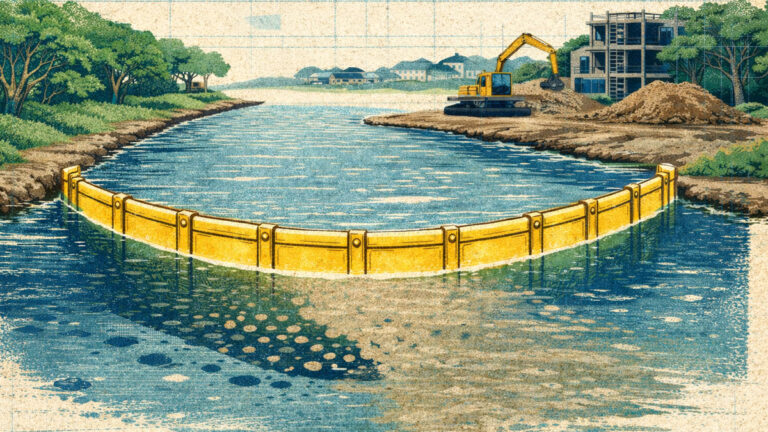
Marine construction, dredging, piling and shoreline works disturb sediment and increase turbidity in surrounding waterways. When suspended particles migrate beyond the work zone, they can impact water quality, aquatic habitats and regulatory compliance.
Silt curtains are used to contain and manage this sediment movement. This guide explains how they function, where they are typically deployed, and the design factors that influence their performance.
Need a Silt Curtain for Your Project?
If you’re planning marine construction, dredging, piling, or shoreline works, see our Floating Silt Curtain systems for available configurations, technical specifications, and supply options across Australia.
How Marine Construction and Dredging Increase Turbidity
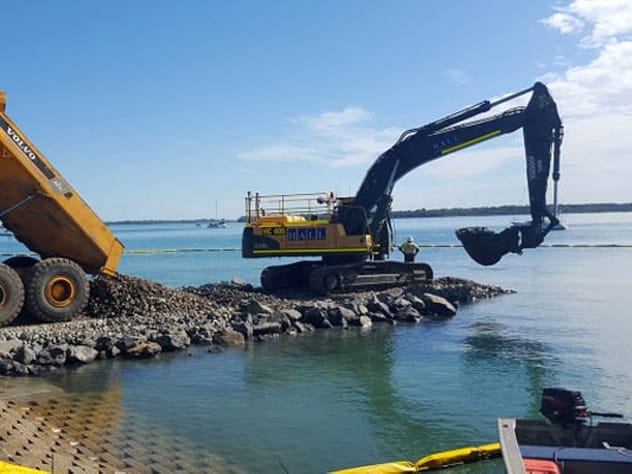
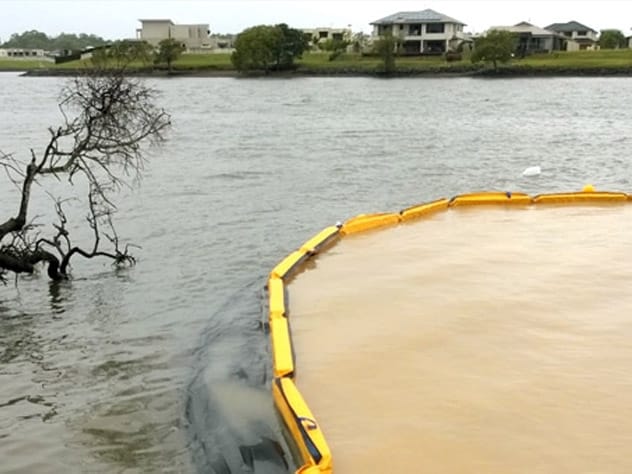
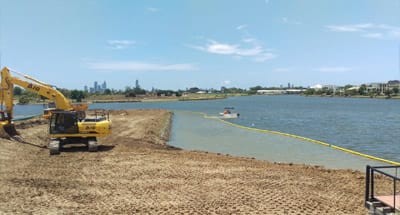
Activities such as dredging, piling, excavation, shoreline construction, and marine infrastructure installation disturb sediment. Once disturbed, fine particles become suspended in the water column.
This suspended sediment increases turbidity and may:
- Reduce light penetration
- Affect aquatic vegetation
- Transport attached contaminants
- Trigger regulatory thresholds under water quality management plans
In tidal or flowing environments, sediment can migrate beyond the immediate work zone unless containment measures are implemented.
Silt curtains are used to localise this turbidity and encourage suspended particles to settle within a defined area.
What Is A Silt Curtain?
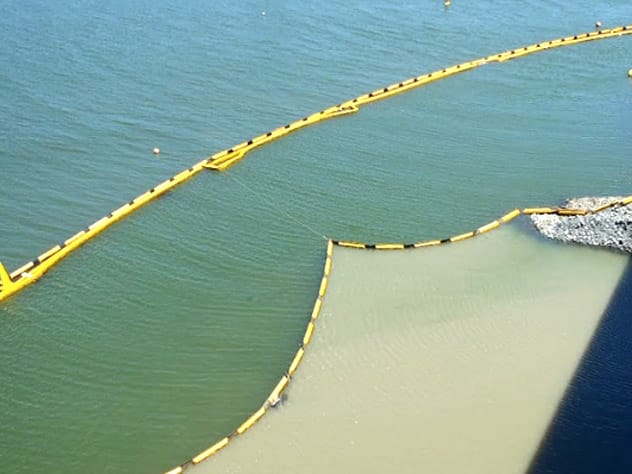
A silt curtain (also known as a turbidity curtain or sediment curtain) is a floating containment barrier used to control the spread of suspended sediment during marine and shoreline construction activities.
The system consists of:
- A buoyant float section at the surface
- A submerged geotextile skirt
- A ballast chain along the base
- Section connectors for continuous deployment
When installed correctly, the curtain forms a vertical barrier in the water column. Suspended sediment is contained within the defined work zone and encouraged to settle, while water continues to pass beneath the skirt.
Silt curtains do not stop water movement. They manage sediment dispersion within a controlled footprint.
How Do Silt Curtains Work?
During construction or dredging, disturbed soil becomes suspended in the water column. Without containment, that sediment can travel beyond the work zone and increase turbidity downstream.
A silt curtain limits that spread by:
- Creating a vertical barrier between the work area and surrounding water
- Deflecting sediment-laden water downward
- Allowing clearer water to pass beneath the curtain
- Encouraging suspended particles to settle within the contained zone
Performance depends on matching the curtain design to site conditions — including water depth, current velocity, tidal movement, and anchoring method.
Types Of Silt Curtains
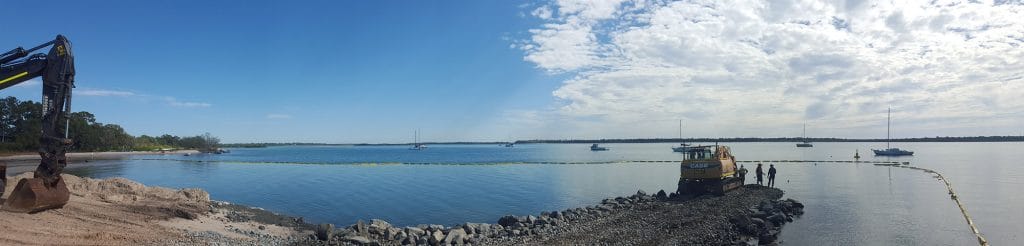
Silt curtains are selected based on water movement, project duration, and the volume of sediment expected. Choosing the correct configuration is critical to maintaining containment performance throughout the project.
Standard Silt Curtains
Used in sheltered or low-energy environments where currents and wave action are limited.
Suitable for:
- Calm waterways
- Shoreline works
- Smaller dredging or piling operations
- Short- to medium-term projects
Typically configured with moderate float size and ballast appropriate for contained conditions.
Heavy-Duty Silt Curtains
Designed for tidal environments, exposed marine conditions, or projects generating higher sediment loads.
Used for:
- Large dredging operations
- Tidal waterways
- Marine construction adjacent to open water
- Longer deployment periods
Heavy-duty systems generally include:
- Larger floats for improved buoyancy
- Increased ballast weight
- Reinforced skirts
- Enhanced connection strength
Custom Silt Curtains
Configured where standard depths or environmental conditions require a tailored solution.
May involve:
- Non-standard draft depths
- Extended lengths
- Alternative skirt materials
- Specific anchoring or tension cable systems
Custom systems are typically specified following review of site depth, current speed, tidal range, and project duration.
Design & Installation Considerations
The performance of a silt curtain depends on selecting the correct configuration and installing it to suit site conditions.
Incorrect specification – particularly in tidal or flowing environments can lead to curtain failure, or reduced sediment containment performance.
Key Design Factors
Water depth (draft requirement)
The curtain draft must extend sufficiently below the water surface to contain suspended sediment without dragging excessively on the seabed.
Float size and freeboard
Float diameter determines buoyancy and surface stability. Higher-energy sites typically require larger floats to maintain curtain alignment.
Ballast weight
Ballast chain stabilises the curtain skirt and maintains vertical tension. Heavier ballast is required in tidal or moving water environments.
Skirt material
The geotextile skirt must balance sediment containment with controlled water permeability to prevent excessive pressure build-up.
Connection strength
Curtain sections are joined using ASTM-standard connectors or equivalent systems to ensure continuity across long deployments.
Installation Considerations
Proper installation is just as important as product selection.
Factors that influence installation include:
- Current speed and tidal range
- Wind exposure and wave action
- Seabed composition (sand, mud, rock)
- Anchor type and embedment method
- Deployment duration
In flowing water, additional anchoring or tension cable systems may be required to maintain curtain position.
Matching curtain design to environmental conditions helps ensure effective sediment control throughout the project lifecycle.
Silt Curtains for Dredging Projects
Dredging activities can generate significant suspended sediment. Without effective containment, fine particles can migrate beyond the work zone, increasing turbidity and affecting surrounding waterways.
Key considerations for dredging deployments:
Draft depth selection
Curtain draft must match the dredging depth while avoiding excessive seabed drag that can reduce effectiveness or damage the skirt.
Ballast weight and stability
Heavier ballast chains are often required in dredging environments where sediment plumes and vessel movement increase water turbulence.
Section length and layout planning
Longer dredging operations may require modular curtain sections configured in straight runs, arcs, or exclusion zones depending on the site layout.
Tidal and current behaviour
In tidal waterways, anchoring systems and tensioning methods must account for directional flow changes to maintain curtain integrity.
Compliance documentation
Many dredging projects operate under environmental management plans requiring sediment control measures. Silt curtain specifications are often submitted as part of project compliance documentation.
Proper configuration helps ensure the curtain performs as intended throughout the dredging program without unnecessary over-specification.
How much does a silt curtain cost?
The final cost of a silt curtain installation depends mainly on three factors.
- The length of curtain required for the project.
- The type and technical properties of the curtain and the accompanying equipment.
- The environmental factors listed above.
One thing is certain – getting it right the first time is much less costly than modifying the incorrectly planned or installed system.
Besides, the equipment itself, Trade Enviro provides all additional services – including system design and installation – anywhere in Australia. You can count on our expert advice and ingenuity. Reach out today to start the conversation about your ideal silt curtain solution.