
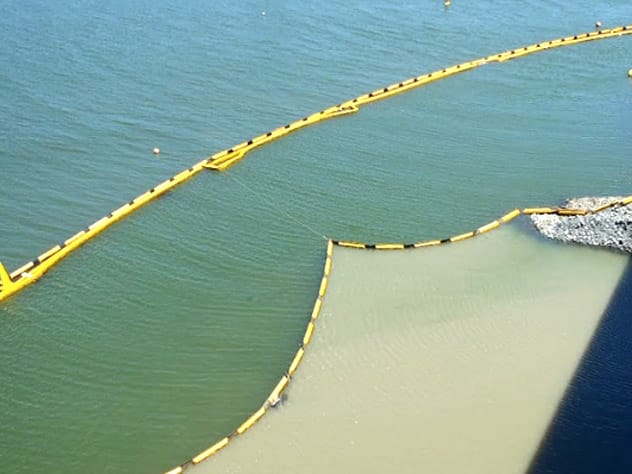
Trade Enviro supplies heavy-duty floating silt curtains for marine construction, dredging, piling and shoreline works across Australia. Standard and custom systems are available in multiple draft depths, float sizes and ballast configurations to suit all environments.
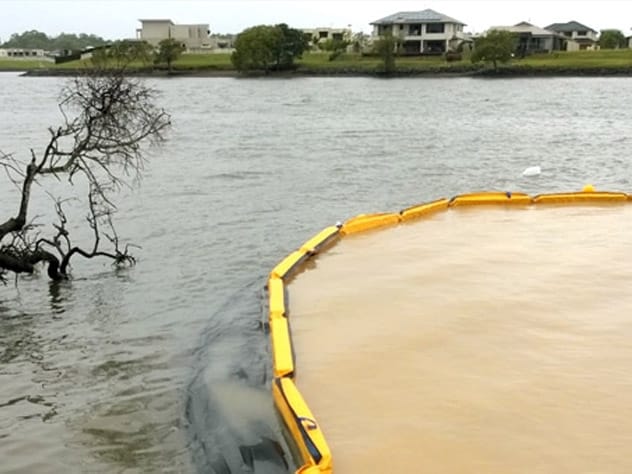
Designed to control suspended sediment and turbidity during in-water works, floating silt curtains help limit sediment migration and support environmental compliance requirements on construction and civil projects. Also referred to as floating turbidity curtains or sediment curtains, these containment barriers use a buoyant float and weighted skirt to contain suspended particles while allowing controlled water flow beneath the curtain.
Trusted by industrial operators across Australia






Available Configurations
| Draft (Depth) | Float Size / Freeboard | Standard Length | Ballast Chain | Connector | Skirt Material |
|---|---|---|---|---|---|
| 1 m | 100 mm PVC | 15 m | 6 mm | ASTM Z-Connector | Nonwoven 90 micron |
| 2 m | 100 mm PVC | 15 m | 6–8 mm | ASTM Z-Connector | Nonwoven 90 micron |
| 3 m | 100 mm PVC | 15 m | 6–8 mm | ASTM Z-Connector | Nonwoven 90 micron |
| 1 m | 150 mm | 15 m | 8 mm | ASTM Z-Connector | Nonwoven 90 micron |
| 2 m | 150 mm | 15 m | 8 mm | ASTM Z-Connector | Nonwoven 90 micron |
| 4 m | 150 mm | 15 m | 8 mm | ASTM Z-Connector | Nonwoven 90 micron |
| 3 m | 200 mm | 15 m | 10 mm | ASTM Z-Connector | Nonwoven 90 micron |
| 4 m | 200 mm | 15 m | 10–12 mm | ASTM Z-Connector | Nonwoven 90 micron |
Standard configurations are available for a wide range of marine, dredging, and in-water construction conditions. Heavy-duty and custom options are available on request.
Technical Definitions
- Freeboard: Distance from waterline to top of float chamber
- Draft: Distance from waterline to bottom of curtain
- Skirt: Material between float and ballast chain pocket
- Ballast: Galvanised chain providing stability at the curtain base
- Connector: ASTM standard Z-connector system
Why Choose A Silt Curtain?
Effective sediment control
Designed to contain suspended silt and turbidity during in-water works, helping protect surrounding waterways.
Supports environmental compliance
construction costs and reuse the system across multiple sites.
Adaptable to site conditions
Available in multiple depths, float sizes, and ballast options to suit sheltered waters through to tidal and higher-energy environments.
Suitable for short or long-term deployment
Can be configured for temporary projects or extended installations depending on site conditions and program duration.
Types of Silt Curtains
Silt curtains are supplied in different configurations depending on water conditions, project duration, and sediment control requirements.
Standard silt curtains
Designed for general sediment control in sheltered or low-energy waterways. Suitable for many construction, dredging, and shoreline works where water movement is minimal to moderate.
Heavy-duty silt curtains
Built for higher-energy environments such as tidal waterways, exposed marine sites, and long-term deployments. These curtains typically use larger floats, heavier ballast, and reinforced skirts for added stability.
Custom silt curtains
Configured to suit specific site conditions, including non-standard depths, extended lengths, alternative skirt materials, or specialised ballast and anchoring requirements.
Typical Applications
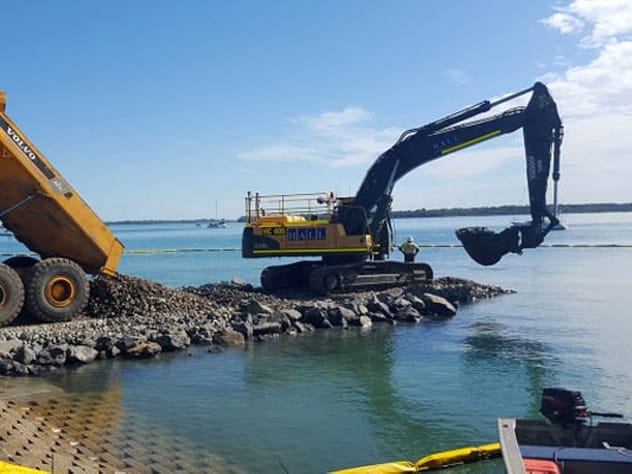
Silt curtains (also referred to as turbidity curtains, sediment curtains, or silt booms) are commonly used to control sediment migration during:
- Marine construction works
Jetty, bridge, marina, and shoreline construction activities where floating turbidity curtains are required to control suspended sediment. - Dredging operations
Containing suspended sediment generated during dredging to protect surrounding water quality. - Piling and marine excavation
Limiting sediment dispersion during in-water piling and excavation works. - Developments near waterways
Managing sediment runoff from construction activities adjacent to rivers, estuaries, lakes, and coastal areas. - Environmental and remediation projects
Isolating disturbed sediment during aquatic vegetation management or remediation works.
Unsure What Your Site Requires?
Speak with our team before committing to equipment or installation. We’ll help confirm the right containment, washdown, or stormwater solution for your site.
- Leased, temporary or fixed site conditions
- Trade waste or EPA compliance questions
- Need confirmation before purchasing or installing
No obligation • Compliance-focused advice tailored to your site
Design & Installation Considerations
The performance of a silt curtain or floating sediment curtain depends on matching the curtain design to site conditions and installing it correctly.
Key design factors include:
- Float size and freeboard – affects buoyancy, visibility, and surface stability
- Skirt material and depth – determines sediment containment performance
- Ballast weight – provides stability and maintains curtain shape in moving water
- Connection method – ensures continuity between curtain sections
Installation considerations:
- Water depth, currents, and tidal movement
- Riverbed or seabed composition (sand, mud, rock)
- Anchoring and tension requirements in flowing or tidal environments
Proper assessment of these factors helps ensure the curtain remains effective throughout the project duration.
Why Trade Enviro?
- Project-appropriate supply
Silt curtains configured to suit site conditions, deployment duration, and water movement. - Built for Australian conditions
Designed for local waterways, tidal environments, and marine construction works. - Specification support
Practical guidance to help select curtain depth, ballast, and connections before deployment.