
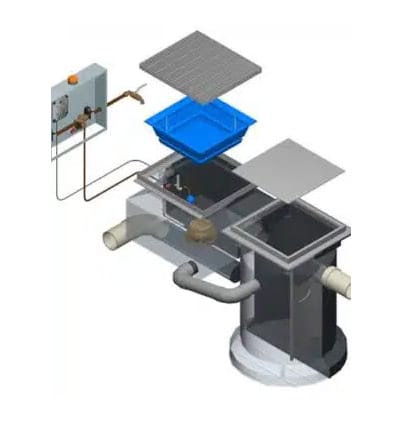
Spill control diversion systems are designed to automatically detect hydrocarbon spills and prevent contaminated runoff from entering the stormwater network.
Using continuous run-off monitoring, these systems divert polluted flows to containment while allowing clean stormwater to discharge as normal – providing 24/7 protection for high-risk industrial sites.
Trusted by industrial operators across Australia






Spill Control System Options
Spill Control System Comparison
| Feature | SCS600 Spill Control System | CMS600 Constant Monitoring System |
|---|---|---|
| Contaminant type detected | Free-floating hydrocarbons | Water-soluble contaminants |
| Monitoring method | Hydrocarbon sensor | Sensor probe |
| Operation | Fully automated | Fully automated |
| Diversion action | Diverts contaminated runoff | Diverts runoff until water quality is safe |
| Gross pollutant screening | 50L silt basket | 50L silt basket |
| Typical application | Fuel, oil, hydrocarbon risk sites | Chemical or process-contaminated sites |
| Brand | Fox Enviro | Fox Enviro |
SCS600 – Hydrocarbon Spill Control System
- Detects free-floating hydrocarbons
- Automatically diverts contaminated runoff
- Operates during rain events
- Screens gross pollutants via integrated silt basket
- Used for sites with fuel or hydrocarbon spill risk
CMS600 – Constant Monitoring System (Water-Soluble Contaminants)
- Detects water-soluble contaminants
- Diverts runoff until water quality is suitable for discharge
- Sensor-based monitoring system
- Screens gross pollutants via integrated silt basket
- Used for chemical or process-contaminated sites
Is a Spill Control Diversion System Right for Your Site?
Spill control diversion systems are typically required where:
- Fuel, oil, or chemicals are stored or handled on-site
- Washdown or refuelling areas drain to stormwater
- EPA, council, or water authority compliance is mandatory
- Sites must prevent uncontrolled discharge during rain events
- After-hours spill detection and alerts are required
How the System Works
- During rain events, runoff enters the diversion pit
- Sensors continuously monitor water quality
- If contamination is detected, the diversion valve activates
- Polluted runoff is diverted to containment
- Clean stormwater is allowed to discharge as normal
- Alerts can be sent via SMS for after-hours monitoring
Why Use an Automated Spill Control System?
- Prevents accidental environmental breaches
- Reduces reliance on manual spill response
- Operates continuously without staff intervention
- Helps meet EPA and council compliance requirements
- Designed for permanent installation, not temporary response
Servicing & Ongoing Requirements
Spill control systems require routine servicing, typically on a quarterly basis. Service costs should be factored into the total lifecycle cost of ownership. Trade Enviro can provide full servicing schedules, maintenance guidance, and cost estimates during system selection.
System Construction & Installation Details
| Specification | Details |
|---|---|
| Pit material | 6mm MDPE |
| Grate | Galvanised Class D heavy-duty |
| Control box | 304 stainless steel with PLC |
| Silt basket | 50-litre (755mm × 755mm) |
| Installation depth | 775mm |
| Control box size | 600mm × 550mm |
| Outlet size | 150mm to stormwater and trade waste |
| Drive line | ½” OD copper tube |
FAQs
Does a spill control diversion system require servicing?
Yes. Spill control diversion systems contain sensors, valves, and silt baskets that require routine inspection and servicing to ensure reliable operation. Servicing frequency depends on site conditions and regulatory requirements.
Can the system operate automatically without manual intervention?
Yes. Both the SCS600 and CMS600 are fully automated systems. They continuously monitor runoff during rain events and automatically divert contaminated water when a spill is detected.
Is the system suitable for existing sites or only new construction?
Spill control diversion systems can be installed in both new construction projects and existing sites, subject to site layout, drainage configuration, and installation constraints.
How do I choose between the SCS600 and CMS600 systems?
The choice depends on the type of contaminants present on site.
The SCS600 is designed to detect and divert free-floating hydrocarbons, while the CMS600 monitors water-soluble contaminants and diverts runoff until water quality is suitable for discharge.