
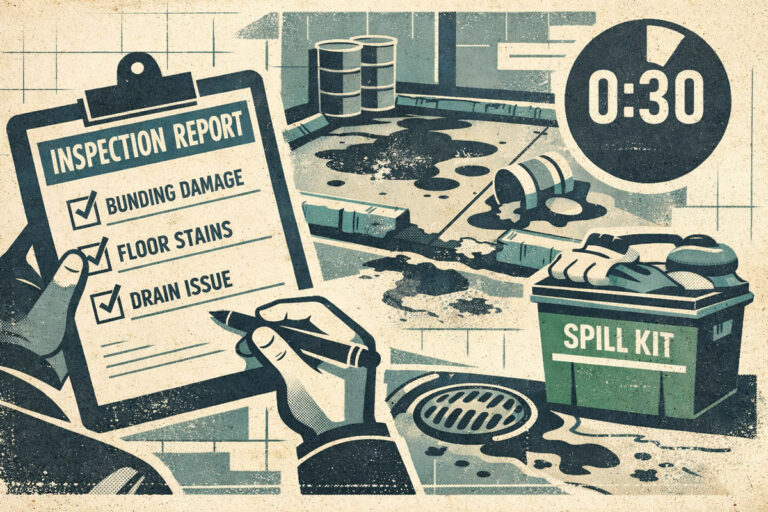
An inspector walks into your warehouse.
Before they read a procedure…
Before they check capacity calculations…
Before they ask for documentation…
They look at the floor.
They look at the bund line.
They look at the storage area.
They look at the drain nearby.
What they see in the first 30 seconds tells them whether containment is being managed — or just assumed.
Is the bunding clearly visible?
Is the perimeter intact?
Are risk areas clean, defined, and controlled?
Or do they see gaps, staining, blocked spill kits, and containment that looks like it has been ignored?
Visible disorder around bunding usually signals a deeper control problem.
What Inspectors Notice First
In the first few moments, inspectors are usually not looking for technical detail. They are looking for visible signs that the containment area is defined, maintained, and under control.
That usually means checking for:
- a clearly visible bund line
- a continuous containment perimeter
- nearby drains that are identified and protected where required
- spill response equipment that is easy to find and access
- an area that looks organised, maintained, and actively managed
If the containment area looks unclear or neglected, inspectors often assume the underlying controls may be weak as well.
Unsure What Your Site Requires?
Speak with our team before committing to equipment or installation. We’ll help confirm the right containment, washdown, or stormwater solution for your site.
- Leased, temporary or fixed site conditions
- Trade waste or EPA compliance questions
- Need confirmation before purchasing or installing
No obligation • Compliance-focused advice tailored to your site
The 3 Most Common Visual Red Flags
1. The Containment Boundary Is Obscured
If the bund line is faded, damaged, inconsistent, or visually lost against the floor, the area immediately looks unmanaged.
Inspectors notice this quickly because containment only works when the perimeter is clear, continuous, and easy to identify.
2. The Area Looks Untidy or Poorly Controlled
Spills stains, clutter, loose containers, and blocked access around the bunded area all signal poor day-to-day control.
Even before any measurements are checked, that creates doubt about maintenance, housekeeping, and containment discipline.
3. Spill Response Equipment Is Hard to Access
If spill kits are hidden behind stock, blocked by pallets, or not positioned near the risk area, that stands out immediately.
In the event of an actual spill, response time is critical. Inspectors know that, and they notice when access hasn’t been given due consideration.
How to Improve Visible Compliance Fast
If the area looks unclear at first glance, start by making the containment controls easier to see, easier to access, and easier to manage.
That usually means:
- repairing damaged or hard-to-see bund sections
- making sure the containment boundary is visually clear
- keeping spill response equipment visible and within easy reach
- removing clutter from bunded storage areas
- clearly identifying nearby stormwater drains and reviewing whether they are adequately protected
- replacing faded labels or markings that support the area’s control measures
Visible compliance starts with visible control.
What Usually Needs Attention First
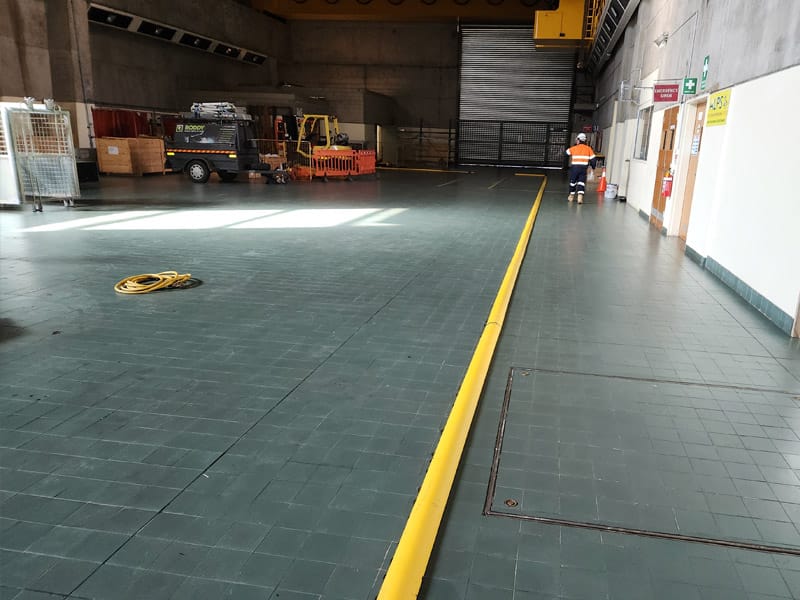
When a bunded area fails the “first glance” test, the issue is usually the condition and visibility of the containment itself.
That often includes:
- damaged or low-visibility floor bunding that is hard to identify
- inconsistent or broken containment lines
- unprotected drains near spill risk areas
- spill response points that are not positioned near the hazard
- poor visual separation between storage and surrounding traffic areas
In most cases, improving visibility starts with restoring the containment boundary, not just adding more signage.
If the bund line is unclear, the entire control system looks unclear.
Legal and Compliance Context
Inspectors do not treat visual issues as isolated problems.
If a bunded area looks poorly maintained, unclear, or incapable of containing a spill, it can trigger questions about whether your site risk controls are still effective.
Under the WHS Regulation 2011 (Qld), control measures must be maintained so they remain suitable and effective.
Under Queensland’s environmental framework, businesses are also expected to take reasonable and practicable steps to prevent or minimise environmental harm.
If containment looks neglected, the inspection rarely stops at appearances.
Need Advice?
Want your bunding area to look inspection-ready at first glance?
We can help you review the layout, visibility, and containment detail to make sure the system is clear, controlled, and perfectly suited to how your site operates. Get in touch today.