

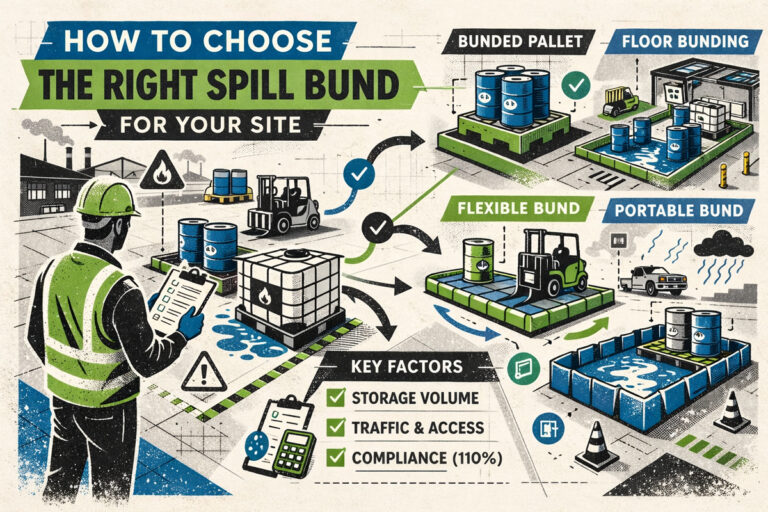
Choosing the right spill bund for your site is not just about containment – it’s about compliance, practicality, and risk management.
Choosing the wrong bunding system can create a range of problems.
Forklifts may not be able to pass over the bund safely, rainwater may reduce containment capacity, or the bund may simply fail to meet regulatory requirements, now or in the future due to operational wear and tear.
For most sites, the correct solution depends on:
- How liquids are stored
- How liquids are handled
- How staff and equipment utilise, and move through the area.
In the guide below, we explain the main types of spill bunds used in Australian workplaces and how to determine which type is the best for you.
If you’re new to bunding, you may also want to read our guide explaining bunding for spill containment and when it is required.
The Main Types of Spill Bunds
Different bunding systems are designed for different operating environments. The five most common solutions used across warehouses, industrial facilities, and construction sites are outlined below.
Bunded Spill Pallets
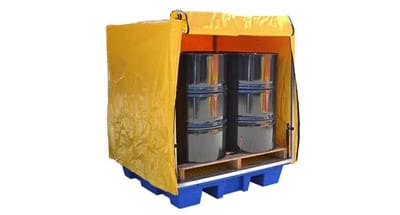
Bunded pallets are self-contained units designed to hold drums or IBCs above an integrated sump that captures any leaks or spills.
They are one of the simplest ways to introduce compliant spill containment into a storage area.
Bunded pallets are commonly used where:
- drums or IBCs are stored in fixed locations
- chemicals or fuels are stored indoors
- smaller storage volumes are involved
They are available in multiple configurations including two-drum, four-drum and IBC units.
Because the containment sump is built into the pallet, the storage capacity is known and easy to verify for compliance.
Typical uses include drum storage areas, chemical storage rooms and fuel storage zones.
Explore bunded pallets
Rubber Floor Bunding
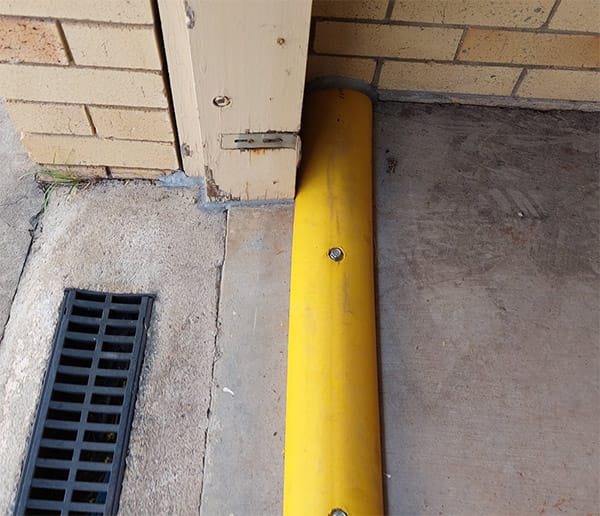
Rubber floor bunding is used to create containment zones on existing concrete slabs without major construction works.
Heavy-duty rubber bunds are fixed to the floor to form a continuous containment barrier around an area where liquids are stored or handled.
This approach is commonly used in:
- warehouses
- wash bays
- transfer areas
- storage zones with forklift traffic
Rubber bunding has a low-profile shape that allows forklifts and pallet jacks to pass over it while still maintaining containment.
It is often chosen where large floor areas need to be bunded, but installing concrete bund walls would be disruptive or impractical.
Explore rubber floor bunding
Unsure What Your Site Requires?
Speak with our team before committing to equipment or installation. We’ll help confirm the right containment, washdown, or stormwater solution for your site.
- Leased, temporary or fixed site conditions
- Trade waste or EPA compliance questions
- Need confirmation before purchasing or installing
No obligation • Compliance-focused advice tailored to your site
Flexible Floor Bunding
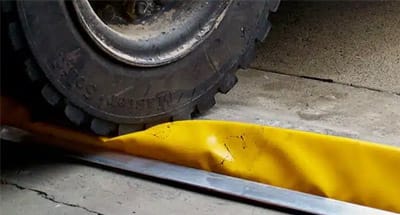
Flexible bunding (aka drive-over bunding) performs a similar function to rubber floor bunding but uses a material that compresses under vehicle wheels and then returns to its original shape.
This can be useful in facilities where forklifts frequently cross bund barriers.
Flexible bunding is commonly installed in:
- warehouses with high forklift traffic
- facilities that frequently move drums or IBCs
- locations where minimising vehicle disruption is important
While flexible bunds allow smoother vehicle movement, they are generally less durable than rigid rubber systems in high-impact environments.
Explore flexible floor bunding
Portable Bunding
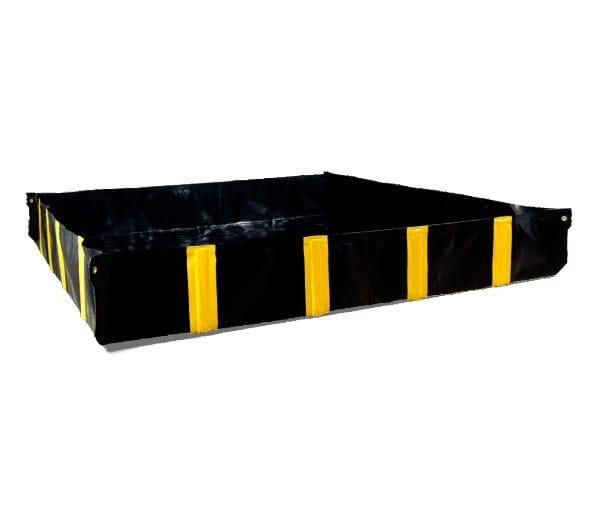
Portable bunds provide containment that can be deployed quickly and removed when no longer required.
They are typically made from reinforced PVC and are used where liquids are temporarily stored or handled outside permanent facilities.
Portable bunds are commonly used on:
- construction sites
- civil works projects
- mining operations
- temporary maintenance areas
They can be folded and transported between sites and are often used where permanent infrastructure is not practical.
Explore portable bunding
Temporary or Emergency Bunding
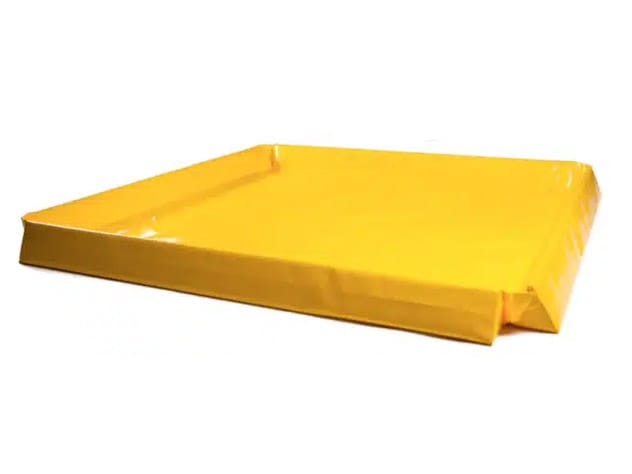
Temporary bunding is designed for rapid deployment during spill events or unexpected leaks.
These systems are usually kept on hand as part of a spill response plan and used to contain liquids until a permanent solution is installed.
Temporary bunding may be used for:
- equipment failures
- drum leaks
- emergency spill containment
- leased site where drilling into the floor isn’t approved
They are not intended for long-term storage but are extremely valuable during spill response situations.
Explore temporary bunding
How To Choose The Right Bund For Your Site
Selecting the correct bunding system depends on several practical factors.
1. How liquids are stored
The storage method strongly influences the containment approach.
Examples:
| Storage situation | Typical solution |
|---|---|
| Individual drums | Bunded pallets |
| IBC containers | IBC bunded pallets |
| Large storage areas | Floor bunding |
| Temporary storage | Portable bunding |
2. Vehicle and forklift traffic
If forklifts regularly move through the area, the bund must allow safe vehicle movement.
Rigid bunds can create operational bottlenecks if vehicles cannot cross them easily. Warehouses with constant vehicle traffic often use low-profile rubber bunding or flexible bunding systems.
3. Indoor vs outdoor installations
Outdoor bunding must also consider rainwater management.
Rainwater accumulation can reduce the available containment capacity and cause otherwise compliant bunds to fail inspections.
Indoor installations typically avoid this issue but still require correct sizing and maintenance.
4. Temporary or permanent operations
Some sites need bunding that can move with changing operations.
Temporary sites such as civil works or maintenance projects often rely on portable bunding systems rather than fixed containment.
Permanent storage areas usually require more robust systems, such as floor bunding or bunded pallets.
5. Compliance requirements
In Australia, bunds must generally be designed to contain at least 110% of the largest container stored within the bunded area, or 25% of the total stored volume, whichever is greater.
This ensures that spills remain contained and cannot escape into stormwater systems or the surrounding environment.
If you want to understand how this rule is calculated in practice, see our detailed guide:
The 110% Bund Capacity Rule Explained
Common Mistakes When Choosing Bunding
Common mistakes we see include:
- ignoring container displacement when calculating bund capacity
- choosing bunds that forklifts cannot safely cross
- installing containment without considering rainwater management
- underestimating storage volumes as operations expand
The best bunding solution balances compliance, practicality and long-term durability.
Need Help?
Every site handles liquids differently, depending on its specific circumstances. The correct bunding system will depend on the site’s specific risks and operational requirements.
Factors such as storage volumes, site layout, vehicle traffic and environmental risk all influence the right approach.
If you’re unsure which bunding system suits your facility, we can help assess your site and recommend a solution that meets both operational and compliance requirements.
Explore our full range of bunding solutions or contact Trade Enviro for guidance.