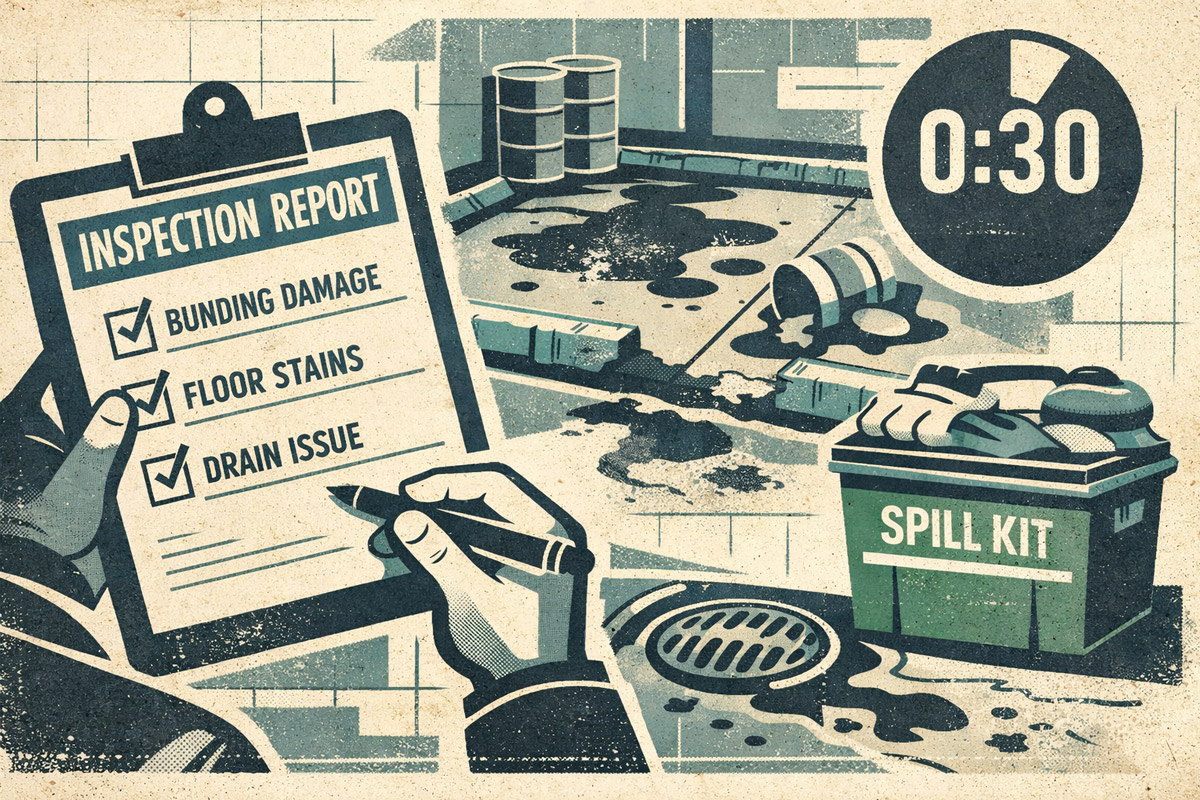
Visible Compliance: What a Regulator Really Sees First
An inspector walks into your warehouse. Before they read a procedure…Before they check capacity calculations…Before they ask for documentation… They look at the floor.…

Technical guidance to help you assess site risks and make informed equipment decisions.
An inspector walks into your warehouse. Before they read a procedure…Before they check capacity calculations…Before they ask for documentation… They look at the floor.…
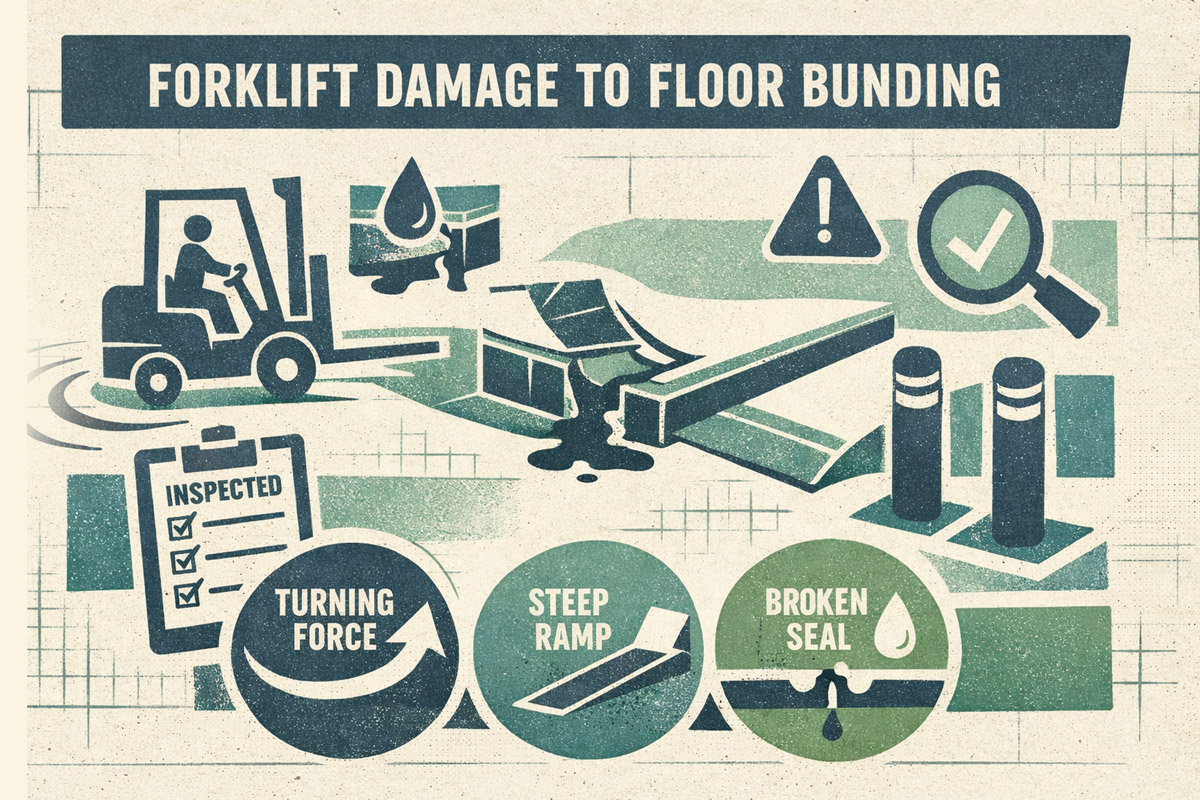
You installed floor bunding last quarter. It looked compliant.It looked sealed.Job done. Then a loaded forklift turns too tightly at the bund edge. The…
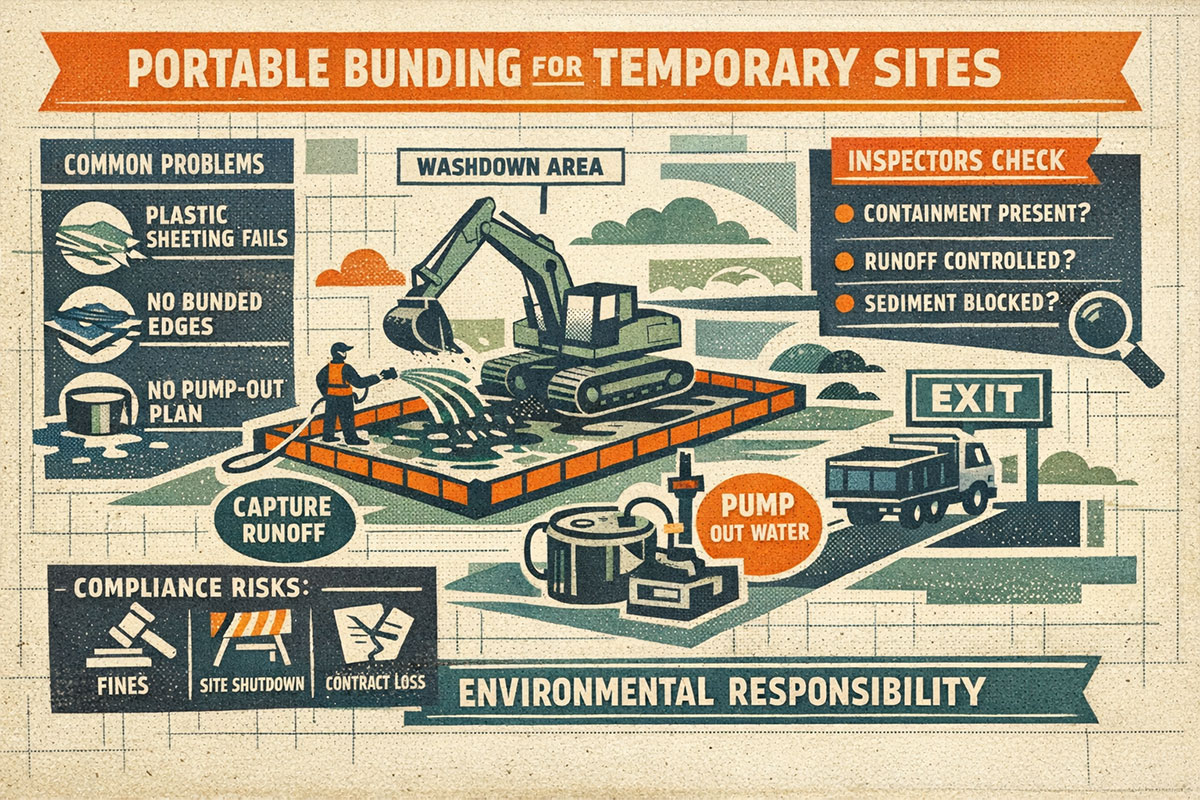
Here’s the thing. You’re managing a temporary earthworks site. Heavy machinery exits the site daily, meaning mud, hydrocarbons and sediment track toward public roads.…
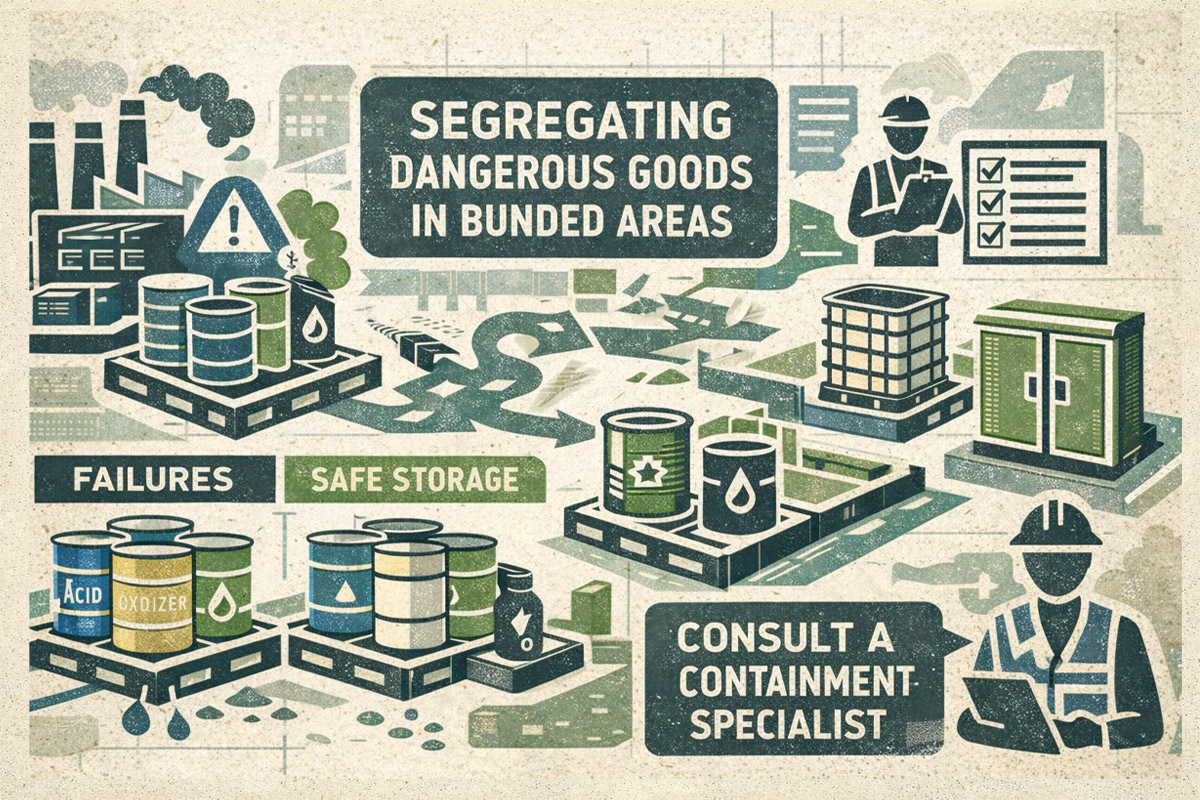
What Gets Sites in Trouble Key Point: If incompatible liquids leak into the same sump, the bund may have contained the spill, but it…
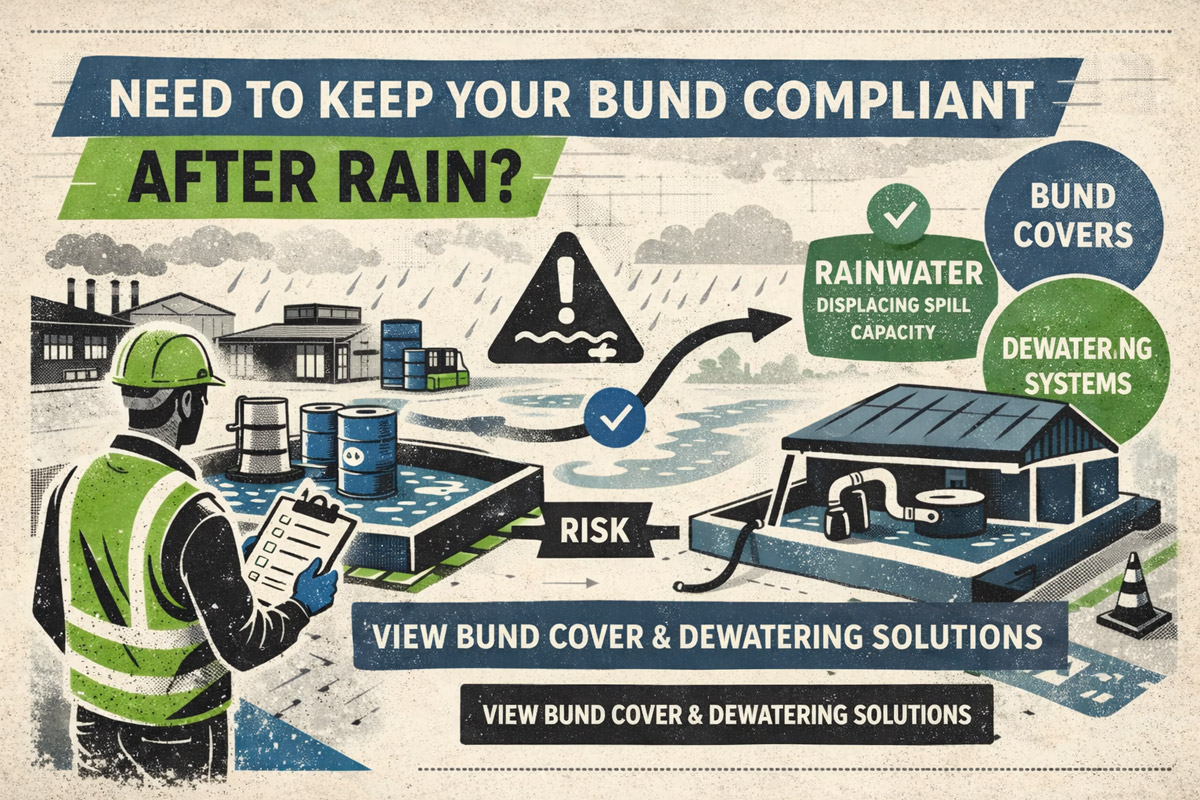
A Storm Passes Through. Your Bund Is Full. You inspect your outdoor bund after heavy rain. It’s full of water. If a container ruptured…
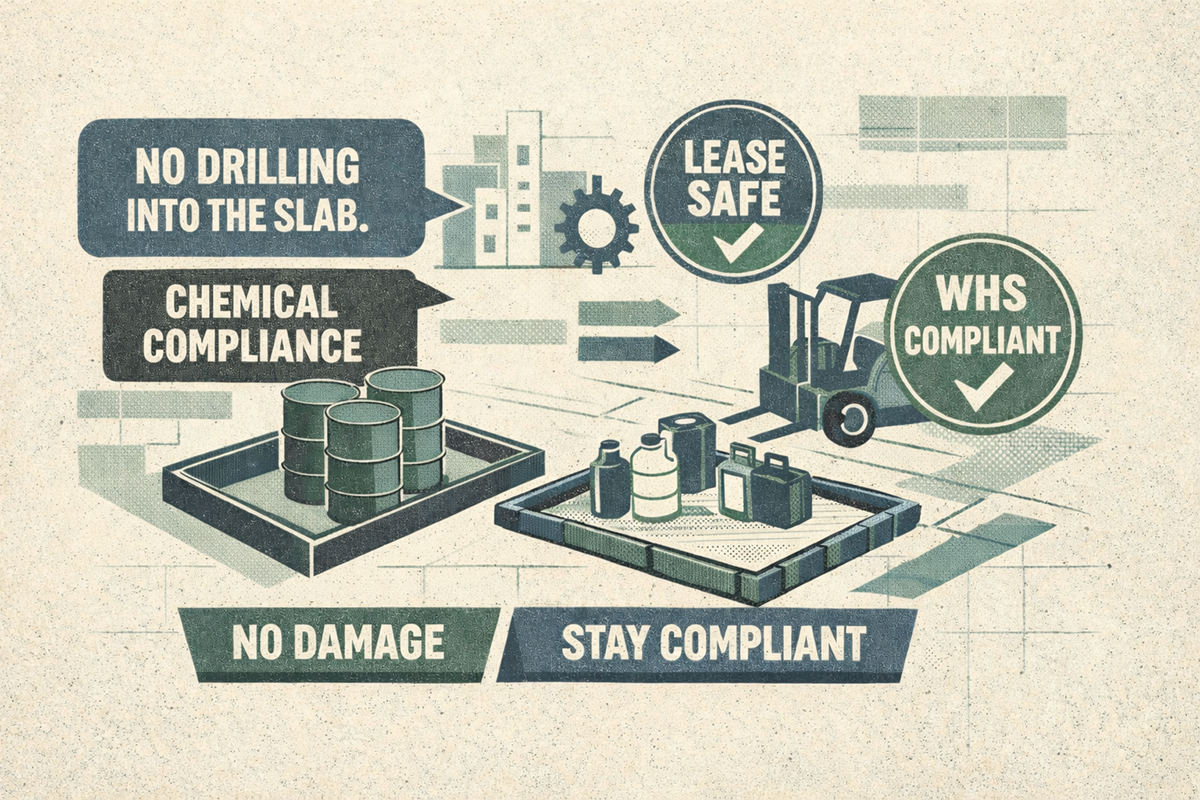
No Drilling Into the Slab You email the property manager: “We need to install floor bunding for chemical compliance.” The reply comes back quickly:…
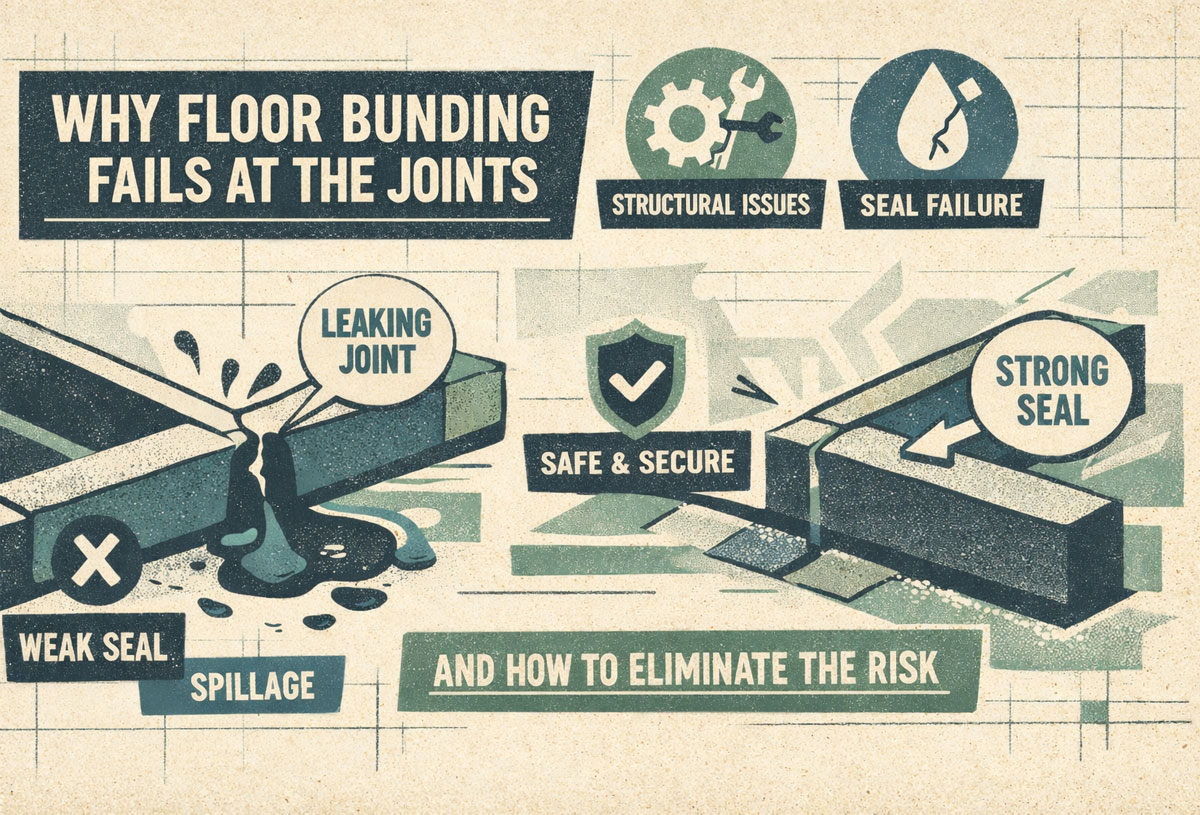
When floor bunding systems experience performance issues, it is most commonly at the joints. Whether installed in workshops, wash bays, warehouses, fuel storage areas,…

What is bunding? Bunding is a form of secondary containment, an impervious physical barrier designed to prevent liquids, such as oil, fuel, and chemicals,…
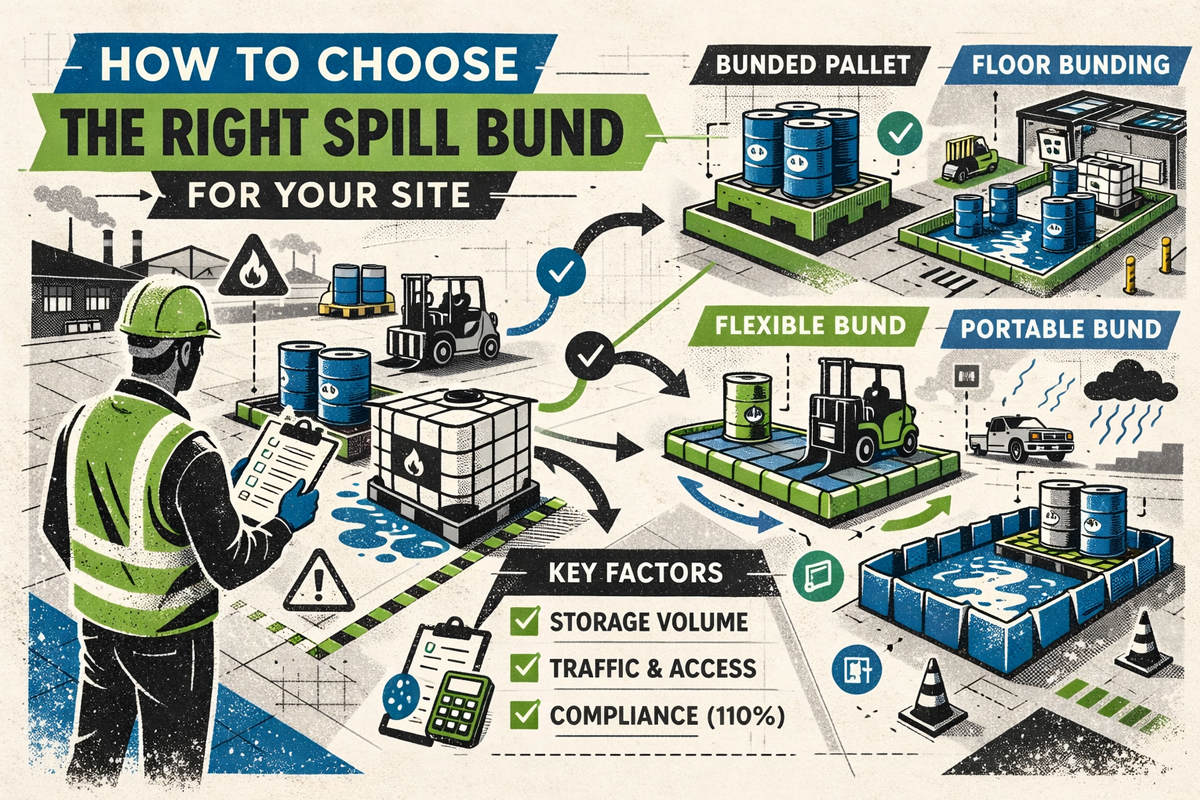
Choosing the right spill bund for your site is not just about containment – it’s about compliance, practicality, and risk management. Choosing the wrong…
Client feedback
Feedback from councils, contractors and organisations working with Trade Enviro across Australia.
“A pleasure to deal with from quote stage right through to delivery. You’re fully informed throughout the process.”

“Fantastic service and very quick turnaround. This is the second lot of bunds we’ve purchased and we cannot fault the service or product.”

“We are very happy with the service and product provided. Delivery was on time and the backup service couldn’t be faulted. I would most certainly use Trade Enviro again.”